
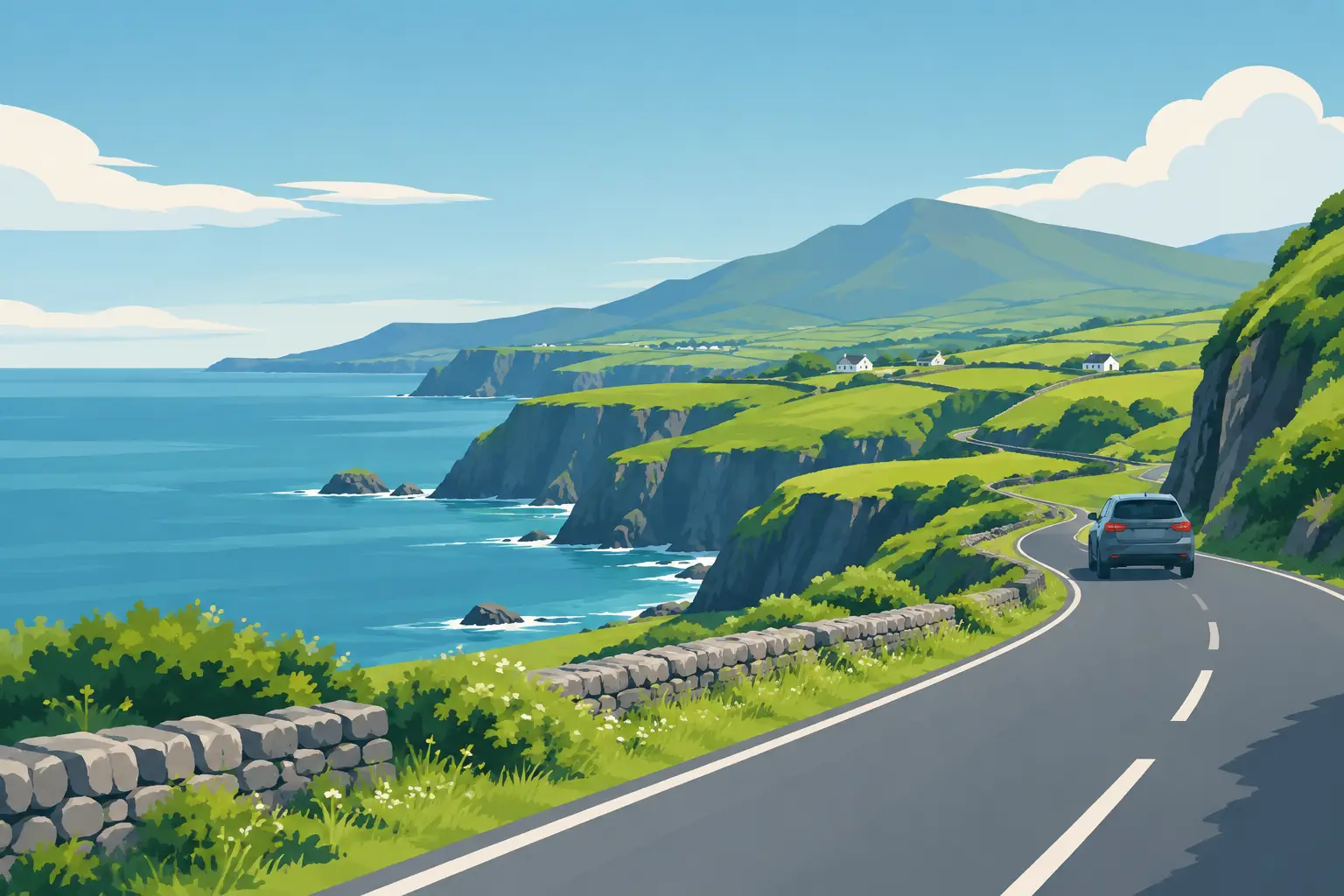
A shower clears over the Atlantic, the road bends around a headland, and suddenly there is a beach, a ruined tower or a mountain pass you would have missed at coach-tour speed. The best scenic drives Ireland has to offer are not simply about covering miles. They are about having the freedom to stop when a view, a village or a good cup of tea calls for your attention.
Ireland is wonderfully suited to a self-drive holiday, but its most rewarding roads can be narrow, winding and full of tempting detours. A little structure makes all the difference. Choose a route that suits your available time, allow more hours than your sat nav suggests, and leave room for the unplanned moments that become the stories you bring home.
Scenic Drives in Ireland: Choose Your Pace
There is no single best driving route for every visitor. The Ring of Kerry delivers famous lakes, mountains and coastal views in a full, satisfying day. The Dingle Peninsula feels more intimate and dramatic, while Connemara offers a quieter landscape of bog, stone walls and sharp peaks. Families may prefer routes with frequent beaches, castles and short walks; couples looking for a slower escape may enjoy the less-busy Beara or Copper Coast.
If you have only a day, focus on one peninsula or one region rather than trying to tick off distant landmarks. Ireland often looks compact on a map, but narrow roads, weather, photo stops and village traffic all add time. The route is part of the experience, not an obstacle between attractions.
1. Ring of Kerry
The Ring of Kerry is a classic for good reason. This circular route around the Iveragh Peninsula combines Killarney National Park, mountain lakes, broad Atlantic bays and colourful villages. Begin early if you can, especially in summer, so you can enjoy viewpoints and short walks before the busiest part of the day.
Moll’s Gap and Ladies View provide the grand sweep of the Killarney lakes, while the Skellig Ring extension adds a wilder coastal character. It is worth taking this detour if time allows. Roads can be tight in places, and larger coaches traditionally travel anti-clockwise, so drive patiently and use safe pull-in areas rather than stopping abruptly for a photograph.
2. Dingle Peninsula and Slea Head
For many travellers, Dingle Peninsula is the route that feels most like the Ireland they had hoped to find. The harbour town of Dingle makes a welcoming base, with independent shops, traditional music and excellent places to eat. From there, the road west leads through Irish-speaking communities towards Slea Head.
The Slea Head Drive has remarkable coastal views towards the Blasket Islands, alongside early Christian sites, beehive huts and little coves. Follow local signs and any one-way directions carefully, as sections are narrow and busy. This is a route to take slowly, with time for a beach walk or a stop in a small café, rather than a circuit to rush through before lunch.
3. The Causeway Coastal Route
Northern Ireland’s Causeway Coastal Route packs a great deal into a relatively short stretch of coast. Starting around Belfast or Londonderry, it follows the North Antrim shoreline through cliff scenery, fishing harbours and glens before reaching the Giant’s Causeway. It is an excellent choice for visitors who want natural drama alongside castles and film-famous locations.
The Giant’s Causeway deserves more than a quick photograph. Its distinctive basalt columns are impressive, but the legend of Finn McCool gives the place its character. Allow time for Dunluce Castle, Ballintoy Harbour and the Glens of Antrim too. Remember that speed limits in Northern Ireland are shown in miles per hour, unlike the kilometres per hour used in the Republic.
4. Connemara Loop
Connemara is Ireland at its most elemental: pale stone walls, dark peatland, glassy loughs and the Twelve Bens rising unexpectedly behind them. A loop from Galway through Oughterard, Clifden, Letterfrack and Leenane gives you a fine introduction without making the day feel over-planned.
Clifden is a useful place to pause, while the Sky Road outside town offers expansive views over the coast and islands. Kylemore Abbey is another popular stop, particularly for visitors interested in gardens, history and a gentler break from the car. Weather changes quickly here, which is part of the landscape’s appeal, but bring waterproof layers even when the morning begins bright.
5. Beara Peninsula
Beara is for travellers who would rather find a quiet viewpoint than queue at a famous one. Stretching between County Cork and County Kerry, this peninsula has a more remote feel than its better-known neighbours. The route passes through Kenmare, over the Healy Pass and around a coastline dotted with small villages, rocky inlets and working harbours.
The Healy Pass is a highlight, but it is steep, twisting and not suited to hurried driving. Use low gears where appropriate, watch for oncoming traffic and avoid attempting it in poor visibility if you are not confident on rural roads. Beara rewards those who stay overnight, because its changing evening light and peaceful roads are difficult to appreciate on a tight timetable.
6. Copper Coast Drive
Between Tramore and Dungarvan in County Waterford, the Copper Coast is a manageable and often overlooked drive with beaches, coves, cliffs and a strong geological story. It is particularly well suited to families or anyone touring the Sunny Southeast who wants a scenic day without the longer distances of the west coast.
Stop in Tramore for the seaside atmosphere, then follow the coast towards Bunmahon and the old mining landscape. The road is less about headline landmarks and more about taking your time: pulling over for a coastal view, stretching your legs on a beach and finding a village pub for lunch. It works beautifully as part of a wider Waterford or Kilkenny itinerary.
7. Wicklow Mountains Drive
Just south of Dublin, the Wicklow Mountains offer an easy transition from city break to countryside escape. The drive through Sally Gap and towards Glendalough can be completed in a day, yet the scenery feels far removed from the capital. Heather-covered uplands, quiet valleys and winding roads make this a memorable introduction to rural Ireland.
Glendalough is the natural focal point, with its monastic settlement and lakeside walks. Visit early or later in the afternoon for a calmer experience, particularly at weekends. The mountain roads are exposed and can be affected by fog, ice or heavy rain, so check conditions and never rely on a scenic route as a shortcut.
Make the Drive Easier, Not More Rushed
A successful Irish road trip needs sensible expectations. Plan for frequent stops, keep your fuel level comfortable in rural areas and download maps before entering places with patchy signal. On single-track or narrow roads, use passing places thoughtfully and give walkers, cyclists, sheep and local traffic plenty of space. A route that appears to take two hours may happily occupy five once you include views, walks and lunch.
For travellers who want guide-led insight without joining a fixed group, MyDriveTour turns professionally curated routes into a flexible companion on the road. Its tours combine navigation with automatic audio commentary at relevant points of interest, helping you understand what you are seeing while retaining the freedom to choose your own stops and schedule.
Pack a rain jacket, charge your phone, and resist the urge to chase every landmark on the map. The finest Irish drive may be the one where you turn down a smaller road, arrive somewhere unexpected and have enough time to stay.
