
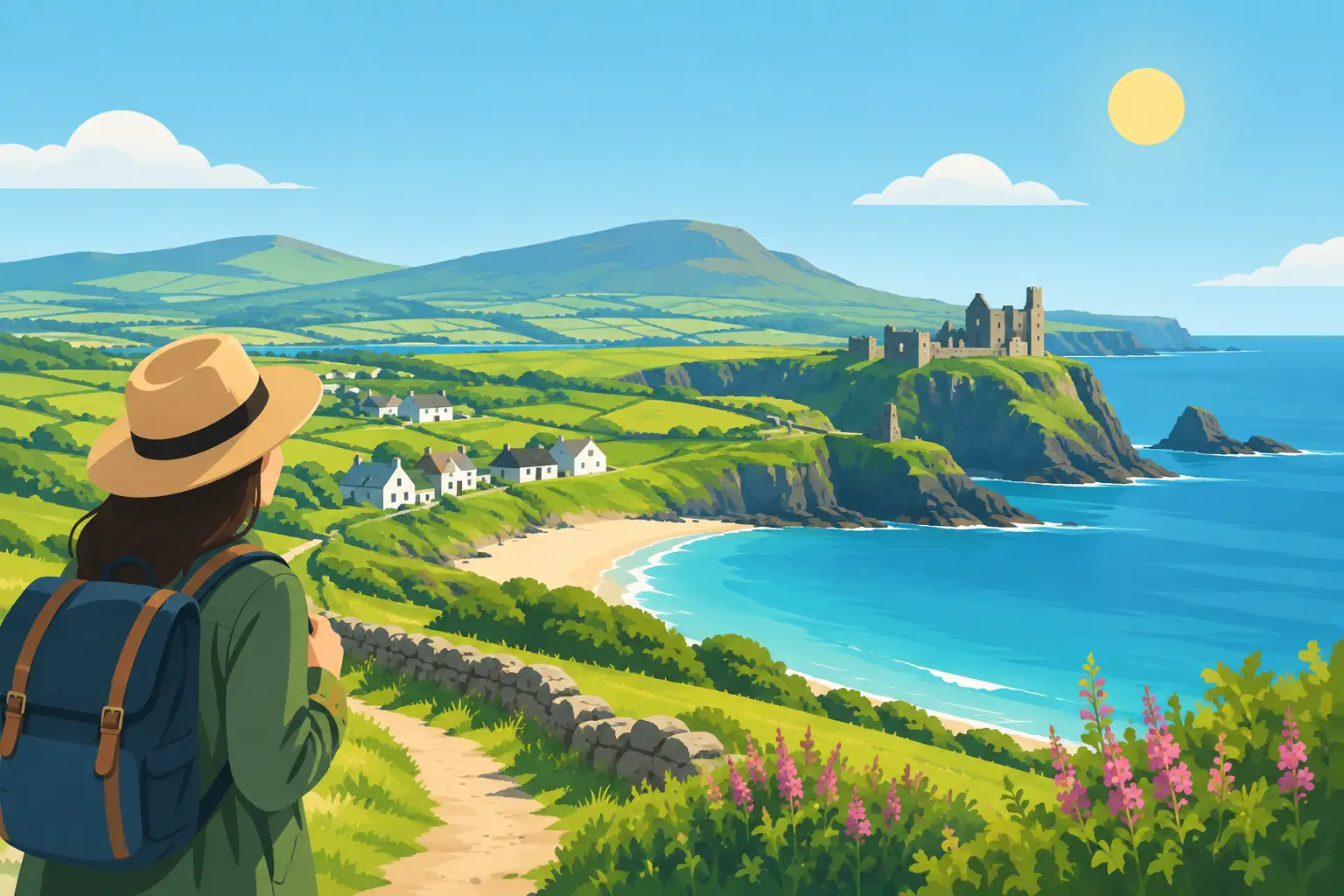
The Sunny South East earns its name on bright mornings beside the Irish Sea, but its real appeal is the variety packed into a manageable drive. This sunny southeast Ireland itinerary gives you five unhurried days for Viking history, dramatic headlands, harbour villages, gardens and medieval streets, without trying to race across the region.
Base yourself for two nights in Waterford, two nights in Wexford and a final night in Kilkenny. It is a sensible route for first-time visitors: driving stages are generally short, the scenery changes often, and there is enough flexibility to linger where the weather and your interests lead you.
Before You Set Off
The Sunny South East is ideal for a self-drive holiday because major sights sit close to quieter places that are easy to miss. A car gives you the freedom to stop at a beach, take a coastal detour or spend an extra hour in a town that surprises you. It also means a little planning matters. Rural roads can be narrow, parking in historic centres is not always free, and seasonal attractions may have reduced opening days outside summer.
Aim to leave each morning with one main visit in mind and two optional stops. That approach prevents the itinerary becoming a checklist. If you are travelling with children, build in beaches, playground breaks and shorter walks. If gardens, food or history are your priority, choose fewer stops and allow time to enjoy them properly.
A guided route in the MyDriveTour app can make the journey feel far less like a navigation exercise. You can follow the route in your preferred mapping app while location-based audio brings the stories behind the places to life as you arrive.
Day 1: Waterford City and the Viking Triangle
Begin in Waterford, Ireland’s oldest city. The compact Viking Triangle is the right place to get your bearings, with medieval walls, museums and streets that reveal more than a thousand years of settlement. Reginald’s Tower is a strong first stop, particularly if you want the story of Waterford’s Viking foundations before exploring the city around it.
Allow the rest of the morning for the museums in the triangle or for Waterford Crystal, depending on your interests. The crystal experience is a worthwhile choice for craft lovers and rainy-day visitors, while history-focused travellers may prefer to spend longer with the city’s archaeological collections.
For lunch, stay in the centre and then walk along the quays. Waterford’s riverfront has long been central to its trading identity, and it is a pleasant place to slow down after a morning indoors. In the afternoon, drive a short distance to Mount Congreve Gardens. Its woodland paths, formal spaces and seasonal planting offer a calm contrast to the city.
Return to Waterford for dinner. Keep this first evening relaxed. You will have plenty of time for the coast tomorrow, and an early finish helps if you have just arrived from Dublin, Cork or Rosslare.
Day 2: Greenway Views and the Copper Coast
Today combines two of County Waterford’s finest experiences. Start with a section of the Waterford Greenway, the former railway line running towards Dungarvan. You do not need to complete the whole route to enjoy it. Hiring bicycles for a few hours is enough to appreciate the viaducts, old station buildings and open countryside.
If cycling is not for you, drive towards Dungarvan and spend the morning around the harbour instead. The town is a good place for coffee, a leisurely lunch and a wander before joining the Copper Coast road.
The Copper Coast Geopark is where this sunny southeast Ireland itinerary becomes properly wild. Between Kilfarrasy and Tramore, the road reveals coves, cliffs and beaches shaped by deep geological time. Stop at Kilfarrasy Beach for broad coastal views, and take your time at Bunmahon, where the remains of a nineteenth-century mining community add a human story to the landscape.
Do not try to pull into every viewpoint. Choose two or three places, check the tide and weather, and take care near unfenced cliff edges. On a clear evening, Tramore is a fine place to end the day before returning to Waterford. Its long strand and promenade provide a lively contrast to the quieter Copper Coast coves.
Day 3: Waterford to Wexford via New Ross
Check out after breakfast and travel east towards New Ross. The direct journey is not long, so there is no need for an early start unless you want to fit in several attractions. New Ross is closely associated with the Dunbrody Famine Ship, an evocative visit that places Ireland’s nineteenth-century emigration story in a personal context.
From here, choose your afternoon according to your interests. The JFK Arboretum, near New Ross, is a peaceful option for a garden walk among mature trees and open parkland. Alternatively, head directly to Enniscorthy, where its castle and heritage centre provide a useful introduction to the 1798 Rebellion and the area’s turbulent history.
Continue to Wexford town for the next two nights. Its narrow streets, independent shops and waterfront make it an appealing evening base. This is not a place that needs an over-planned night. Find a local restaurant, enjoy the atmosphere and save the long coastal exploration for the morning.
Day 4: Wexford Coast, Heritage and Curracloe
Wexford has a softer coastal character than the Copper Coast, with broad beaches, low dunes, working harbours and fertile farmland. Start at the Irish National Heritage Park, just outside Wexford town. The outdoor setting makes Irish history easy to follow, from early settlements to medieval life, and it works especially well for families.
Afterwards, drive north to Curracloe Beach. The vast sandy strand feels wonderfully open, even on busier summer days. It is best suited to a long walk rather than a tightly timed stop, so bring layers and check local conditions before going near the water.
For an alternative to the beach, travel south from Wexford towards Kilmore Quay. This colourful fishing village has a distinctly maritime feel, and the route passes through countryside that rewards a slower pace. Birdwatchers may wish to allow extra time around the nearby Saltee Islands departure point, although boat trips are weather-dependent and should never be treated as guaranteed.
Back in Wexford, leave room for a final stroll through town. If you are visiting during the Wexford Festival Opera period, accommodation and restaurant reservations deserve advance planning. At other times, the town is often pleasantly relaxed.
Day 5: Hook Peninsula and Kilkenny’s Medieval Heart
Leave Wexford and turn towards the Hook Peninsula, one of the most memorable coastal detours in the region. Hook Lighthouse stands at the tip, and its striking black-and-white form is only part of the reason to visit. The site looks out over the meeting point of river and sea, where shipping has passed for centuries.
The lighthouse is a popular attraction, so an early arrival can make the experience calmer. Nearby, the beaches and small coves are appealing for a quick walk, but keep an eye on the clock. Your final destination is Kilkenny, around a comfortable drive inland.
On the way, Tintern Abbey is a rewarding pause. The atmospheric ruins sit in a wooded valley and feel removed from the busier coastal road. It is exactly the kind of stop that makes a self-drive route special: not necessarily the headline attraction, but often the place travellers remember most clearly.
Arrive in Kilkenny by mid-afternoon. Start around Kilkenny Castle and the parade, then follow the Medieval Mile through lanes lined with historic buildings, cafés and small shops. This is a compact city made for walking, and the evening atmosphere is one of the best in the south-east.
Make the Route Your Own
Five days is enough to see the Sunny South East well, but it depends on what you value most. Add a night in Waterford if cycling the full Greenway is a priority. Add time in Wexford if beaches, gardens and birdlife matter more than city sightseeing. For a shorter break, Waterford, the Copper Coast and Hook Peninsula create a satisfying three-day route.
Most of all, leave space for the unscheduled moments: a harbour bench in Kilmore Quay, a roadside view above the Copper Coast, or a quiet lane leading towards Tintern Abbey. With dependable navigation and a little room to wander, the Sunny South East rewards travellers who let the road set a gentler pace.
