
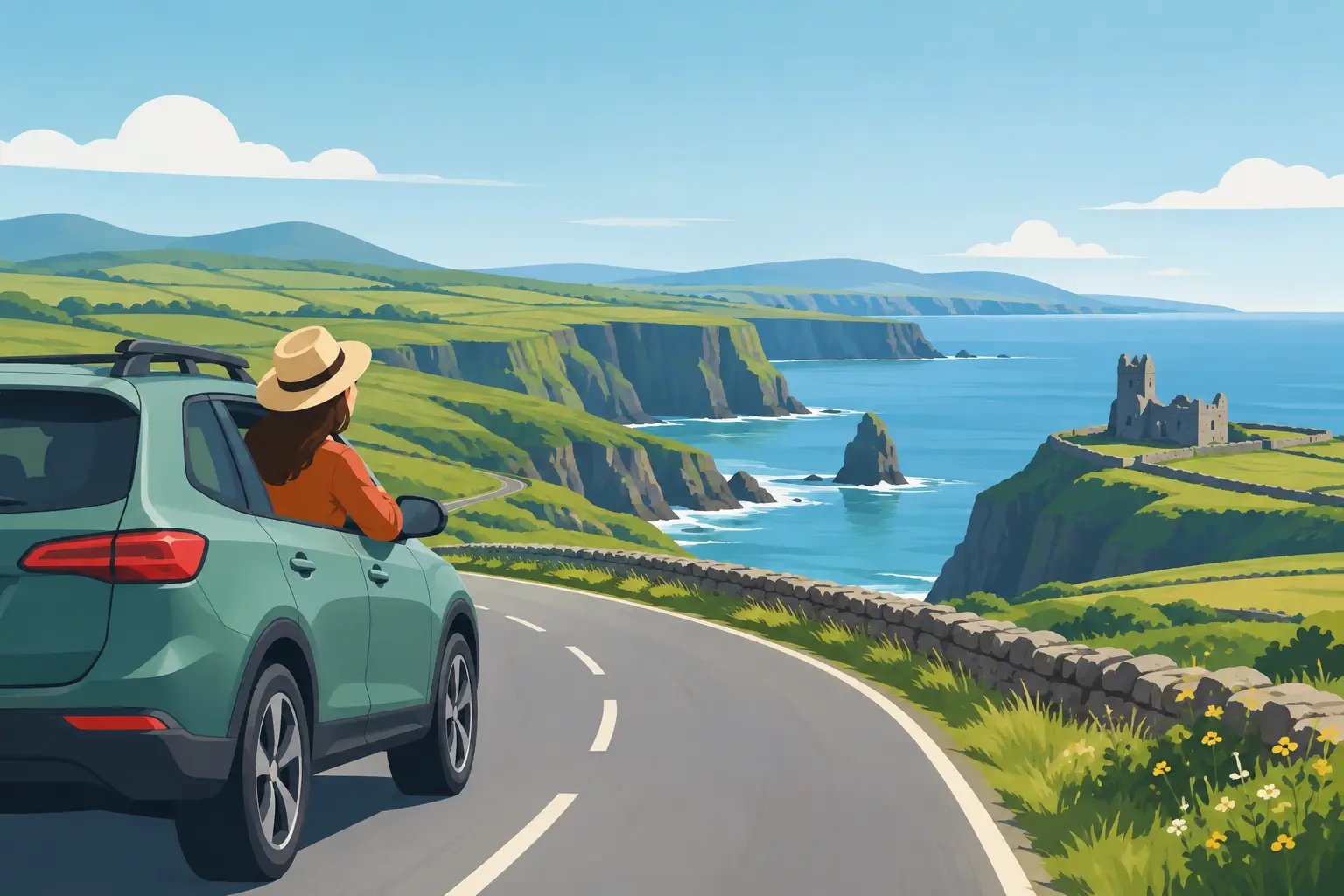
A road sign to a ruined abbey can be easy to miss. So can the turn-off to a quiet beach, the viewpoint above a harbour, or the small town where a local story gives a familiar landscape its meaning. That is the difference between simply driving through Ireland and taking Ireland tours that help you understand where you are.
For independent travellers, the best Irish holiday is rarely spent following a rigid timetable. You may want a longer morning at the Giant’s Causeway, a spontaneous café stop in a West Cork village, or the option to skip an attraction when the weather changes. A self-guided tour gives you that freedom while still providing the route, context and confidence of a knowledgeable guide.
Why self-guided Ireland tours suit the way you travel
Ireland is made for road trips, but its most rewarding routes are not always as straightforward as they look on a map. A short distance can take much longer on narrow coastal roads, and the places worth seeing are often between the headline attractions. Planning every stop from scratch can turn a relaxed holiday into an evening of tabs, bookings and guesswork.
A well-designed self-guided driving tour does the preparation for you. It puts key sights in a sensible order, highlights worthwhile detours and explains what makes each location matter. You remain in charge of the day. Start when it suits you, linger where you like and move on when you are ready.
This approach works especially well for couples, families and small groups sharing a hire car. There is no need to keep pace with a coach group or pay for a private driver when you would rather explore independently. It also suits repeat visitors who know the major sights and want to find the less-commercial corners that give a region its character.
That does not mean a fixed tour is never the right choice. A guided coach trip can be useful if you do not want to drive, while a chauffeur-driven experience offers real comfort for a special occasion. But if flexibility is high on your list, self-guided touring is often the better fit.
What makes a good self-guided tour of Ireland
The strongest tours do more than plot pins on a map. They bring together route planning, local knowledge and practical timing. You should know where to go, why the stop is interesting and how it fits into the rest of your day.
A route that respects real travel time
Ireland rewards a slower pace. The Wild Atlantic Way, Ring of Kerry and North Antrim Coast are spectacular, but scenic roads invite frequent stops and can be busy in peak season. An itinerary that appears manageable in kilometres may be tiring in practice if it does not allow for photographs, walks, lunch and changing weather.
Look for routes that distinguish between essential stops and optional additions. This lets you make sensible choices without feeling that you have missed the whole experience. On a clear summer evening, an extra clifftop viewpoint may be exactly right. On a wet afternoon with children in the back, you may prefer to focus on a castle, visitor centre or warm lunch stop.
Stories delivered in the right place
Context lands differently when you are standing in front of the thing being described. The story of an ancient monument is more memorable when you can see its stones. A tale of emigration, famine, fishing or local folklore becomes more vivid when it is tied to the harbour, valley or village where it happened.
Automatic audio commentary, triggered as you arrive at a point of interest, removes the need to read from a screen while trying to enjoy the view. It turns the car journey between attractions into part of the experience too. Rather than receiving a lecture all at once, you hear relevant local knowledge as the landscape unfolds.
Navigation you can trust
Navigation is a practical detail, but it shapes the whole day. Clear directions reduce the stress of unfamiliar roads and help you spend less time wondering whether you have missed a turn. A tour that can export directions to your preferred mapping app is particularly useful because it keeps travel instructions in the format you already know.
Before setting off, download the tour and check your phone is charged. A car charger is a small but valuable addition to any Irish road trip, especially when your phone is handling maps, commentary and photographs. Mobile coverage is reliable across much of the country, but rural and coastal areas can still have weaker patches, so it is wise not to depend on a signal for every part of the journey.
Choosing the right Irish route for your holiday
The ideal route depends on how much time you have, where you are staying and whether you want dramatic coast, heritage, food or quieter countryside. Trying to cover every famous drive in one visit is a common mistake. Ireland looks compact, yet giving each region room to breathe produces a much better holiday.
The Wild Atlantic Way suits travellers who want long stretches of Atlantic scenery, from lively towns to isolated headlands. It is best approached in sections rather than as a race from one end to the other. Choose a region, stay for several nights and allow time for weather-led decisions.
The Ring of Kerry is a classic choice for first-time visitors. Its mountain passes, lakes, coastline and heritage sites make for a full day, though an overnight stay nearby can make the experience more relaxed. Travelling outside the busiest hours can also help, particularly during summer.
In Northern Ireland, the North Antrim Coastal Drive combines striking sea views with historic sites and the Giant’s Causeway. It is an excellent route for travellers based in Belfast or those crossing between Ireland and Northern Ireland. The Causeway itself deserves time, but do not overlook the smaller coastal villages, castles and viewpoints that create the rhythm of the drive.
The Sunny Southeast offers a different pace. Counties such as Wexford, Waterford and Kilkenny bring together beaches, medieval towns, gardens and food-focused stops. It can be a strong choice for families or for anyone looking to balance scenic driving with shorter walks and town visits.
How to get more from your touring days
Start with one non-negotiable sight and build the day around it. If your priority is the Giant’s Causeway, for example, plan your route and timing around that visit, then treat surrounding stops as opportunities rather than obligations. This prevents the frustrating habit of rushing through every place just to tick off the next one.
Leave space for the unexpected. A hand-painted sign for a local craft shop, a beach visible from the road, or a recommendation from a café owner can become the memory you talk about long after the better-known attraction. A digital guide should give you structure, not remove your ability to follow your curiosity.
It is also worth checking opening times and seasonal access for attractions before you travel. Some heritage sites, boat trips and smaller visitor experiences operate shorter hours outside summer. Weather can affect coastal walks and mountain roads, so carry layers, waterproofs and suitable footwear even when the forecast looks kind.
For families, keep the touring day realistic. Children often enjoy a castle, a beach and a stop for ice cream more than six historic sites in succession. For couples or groups of friends, a later start and a longer pub lunch may be preferable. The route is there to support your holiday, not dictate it.
Your virtual guide on the road
MyDriveTour turns the knowledge of qualified Irish tourist guides and chauffeurs into an on-demand companion for your journey. Its self-guided driving and walking tours combine curated itineraries, navigation to your chosen mapping app, location-triggered audio and useful information for attractions along the way.
You can begin where it makes sense for your plans and select the stops that interest you most. That is particularly helpful when you are staying in one place for several nights, arriving from a different direction, or deciding your day around the weather. Famous landmarks are included, but so are the local discoveries that can be difficult to find without someone who knows the area.
Ireland is at its best when there is time to pull over safely, look beyond the windscreen and hear the story behind the view. Give your itinerary enough room for that, and the road will do the rest.
