
The Wild Atlantic Way is not a route to race through. A brown sign may point you towards a beach, cliff, village or ruined castle that deserves an hour, not a hurried photograph from the car park. This Wild Atlantic Way planning guide is designed to help you shape a self-drive holiday with enough structure to feel confident and enough freedom to follow the coastline when it surprises you.
Stretching from County Donegal to County Cork, the route can be approached in dozens of ways. Some travellers have two weeks and want the sweep of the full west coast. Others have four or five days and would rather know one region properly. Both can be excellent holidays, provided you plan for real driving times, changeable weather and the fact that Ireland’s most memorable places are often found beyond the headline stops.
Decide how much coastline you can truly enjoy
The full Wild Atlantic Way is over 2,500 kilometres when its many peninsulas, islands and coastal loops are included. It is possible to cover a great deal in a fortnight, but it will feel like a touring holiday rather than a relaxing break. If you have seven days or fewer, choose a section rather than attempting the whole route.
Northern stretches through Donegal, Sligo and Mayo suit travellers looking for big landscapes, quiet roads and dramatic Atlantic views. Connemara and County Clare combine mountains, villages, beaches and well-known landmarks, making them a popular first choice. Kerry and West Cork are ideal if you enjoy winding peninsulas, colourful harbour towns and frequent reasons to stop.
A practical rule is to plan one major scenic loop or area each day, not a list of attractions scattered across the map. The route looks manageable on a screen, but coastal roads curve around bays and mountains. The shortest distance is rarely the quickest or the most rewarding.
Choose a direction that suits your flights and plans
You can travel north to south or south to north. Starting in Donegal often gives the journey a wonderfully remote opening before you reach the busier parts of the west coast. Beginning in Cork or Kerry, meanwhile, offers an immediate burst of famous scenery and can work well for visitors arriving through Cork, Shannon or Dublin.
There is no universally correct direction. What matters is avoiding unnecessary backtracking and leaving your final night within comfortable reach of your departure airport. If you are collecting and returning a hire car in Dublin, build in a sensible inland return journey rather than trying to force one final coastal detour into the schedule.
Build your Wild Atlantic Way planning guide around overnight bases
Changing accommodation every night can make a road trip feel efficient, but it can also turn each morning into a packing exercise. For a more relaxed holiday, stay two nights in selected towns and use them as a base for local loops.
Westport is a useful base for County Mayo, while Clifden works well for Connemara. Dingle gives you access to the Dingle Peninsula without having to move on after every stop, and Kenmare can be a fine choice for exploring south Kerry and the Beara Peninsula. In County Clare, Lahinch, Doolin or Ennis each offer a different balance of coast, restaurants and road access.
Base towns do come with trade-offs. Staying in a lively town usually means more dining choices and an easier evening, but accommodation can be in greater demand in summer. A smaller village may feel quieter and more local, yet you may need to plan meals and fuel more carefully. Book early for July and August, bank holiday weekends and major local events.
Allow more time for driving than your map suggests
Irish driving distances can be deceptive. A 90-minute route may become three hours once you include narrow lanes, sheep on the road, photo stops, a coffee in a harbour village and a walk to a viewpoint. That is not poor planning – it is the point of a self-drive holiday.
Aim to keep most driving days to two or three hours of moving time, especially if you are new to driving on the left. This leaves room to park, walk and enjoy the places between the major attractions. On peninsula roads, a single scenic loop can easily fill a day.
Be particularly realistic about routes marked as very narrow or local roads. They can be beautiful, but they demand patience and confidence when meeting oncoming traffic. Use designated passing places where provided, slow down well in advance, and never block an entrance or passing point for a photograph. If your group would rather spend time looking out of the window than concentrating on bends, stay on the main coastal road and choose fewer detours.
Give famous sights and local stops equal value
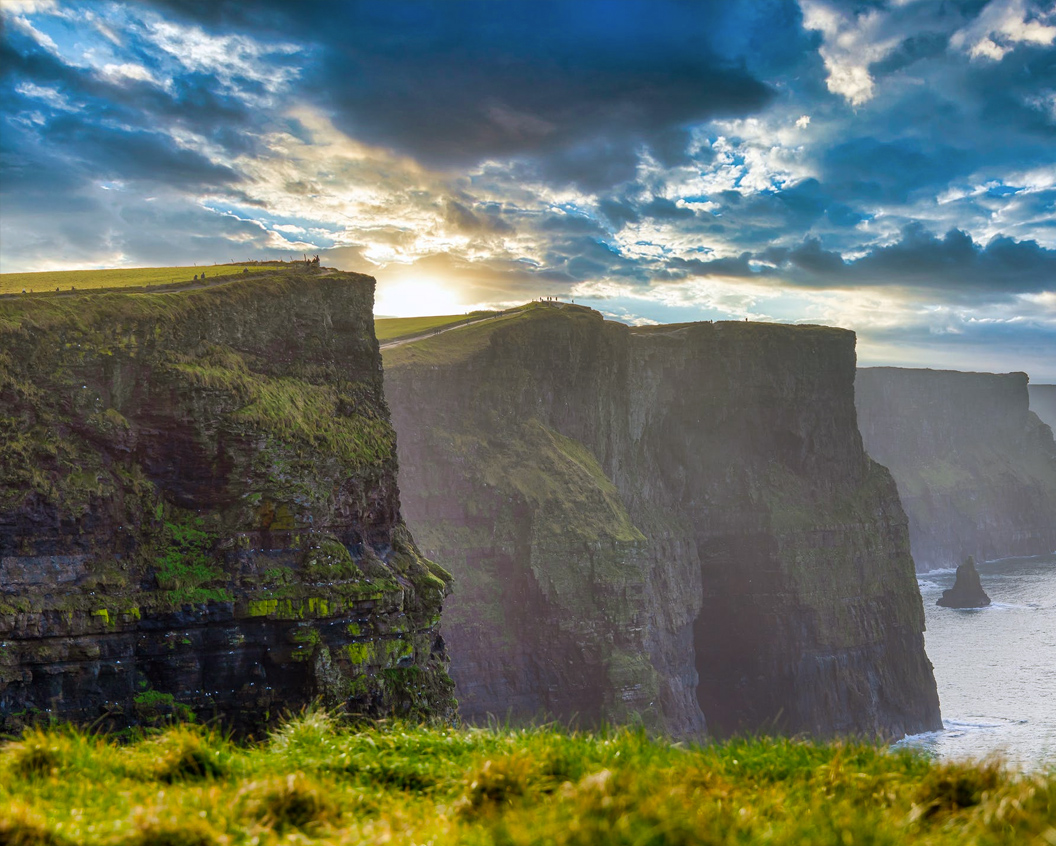
The Cliffs of Moher, Slieve League, Achill Island, the Dingle Peninsula and Mizen Head have earned their reputations. They are spectacular, and most first-time visitors will want to include at least a few. The key is not to make every day a checklist of big-ticket stops.
Pair one landmark with smaller discoveries: a beach walk before breakfast, a craft workshop in a village, a ruined church, a harbour where fishing boats are still working, or a viewpoint that has no visitor centre at all. These quieter pauses provide the sense of place that makes the Wild Atlantic Way feel less like a route and more like a journey.
Check parking and access before you set off. Some locations require a walk from the car park, and coastal paths may be uneven or exposed. Families with young children, travellers with limited mobility and anyone visiting with a tight timetable should choose a few easy-access highlights rather than trying to fit in every clifftop trail.
Plan for Atlantic weather, whatever the forecast says
The west coast can offer sunshine, sea mist, wind and rain in one afternoon. Pack waterproof outer layers, comfortable shoes with grip and an extra warm layer even in summer. A lightweight day bag is useful for keeping water, snacks and dry clothing in the car.
Use the forecast to guide the order of your days, rather than allowing it to spoil them. A clear morning may be the right moment for a high viewpoint. A wet afternoon can be perfect for a distillery visit, gallery, heritage centre or long lunch in a welcoming pub. Low cloud may hide a mountain summit, but rain can also bring out the colour in the fields and fill the waterfalls.
For exposed cliffs and coastal paths, conditions matter more than ambition. Respect barriers, stay back from edges and be prepared to change your plan if winds are strong. The Atlantic is at its best when you give it the respect it deserves.
Let a guide handle the detail while you enjoy the road
Independent travel does not have to mean researching every turn, story and opening time yourself. A well-planned digital tour can give your day a natural flow while leaving you free to decide where to linger. MyDriveTour brings professionally curated routes, navigation to your preferred mapping app and automatic audio commentary together, so the story arrives when you reach the place it belongs. For a holiday that combines the coast with other regions, the All Tours Bundle includes the Wild Atlantic Way tour as well as day tours and city walks.
This is especially helpful on the Wild Atlantic Way, where a modest-looking bend in the road can lead to an extraordinary view or an important piece of local history. You can choose the stops that suit your interests, begin where it makes sense for your day and keep moving at your own pace. It is a practical alternative to joining a fixed coach tour, without losing the insight of an experienced Irish guide.
Sort the small essentials before departure
Keep your driving licence, hire-car details, accommodation confirmations and any attraction bookings easy to access. Download maps and tour content while you have reliable Wi-Fi, as mobile signal can weaken in remote coastal areas. Carry a charging cable or car charger, but do not rely on your phone alone for every decision – road signs, weather and local advice still count.
Fill up with fuel before heading onto longer peninsula routes, particularly on Sundays or outside peak season when smaller stations may have limited hours. Book dinner in advance if you are staying in a popular town during summer. And when you find a café, beach or viewpoint that was not in your original plan, allow yourself to stop.
The finest Wild Atlantic Way days usually have one clear destination, a few well-chosen possibilities and enough empty space for Ireland to make the next decision for you.
