
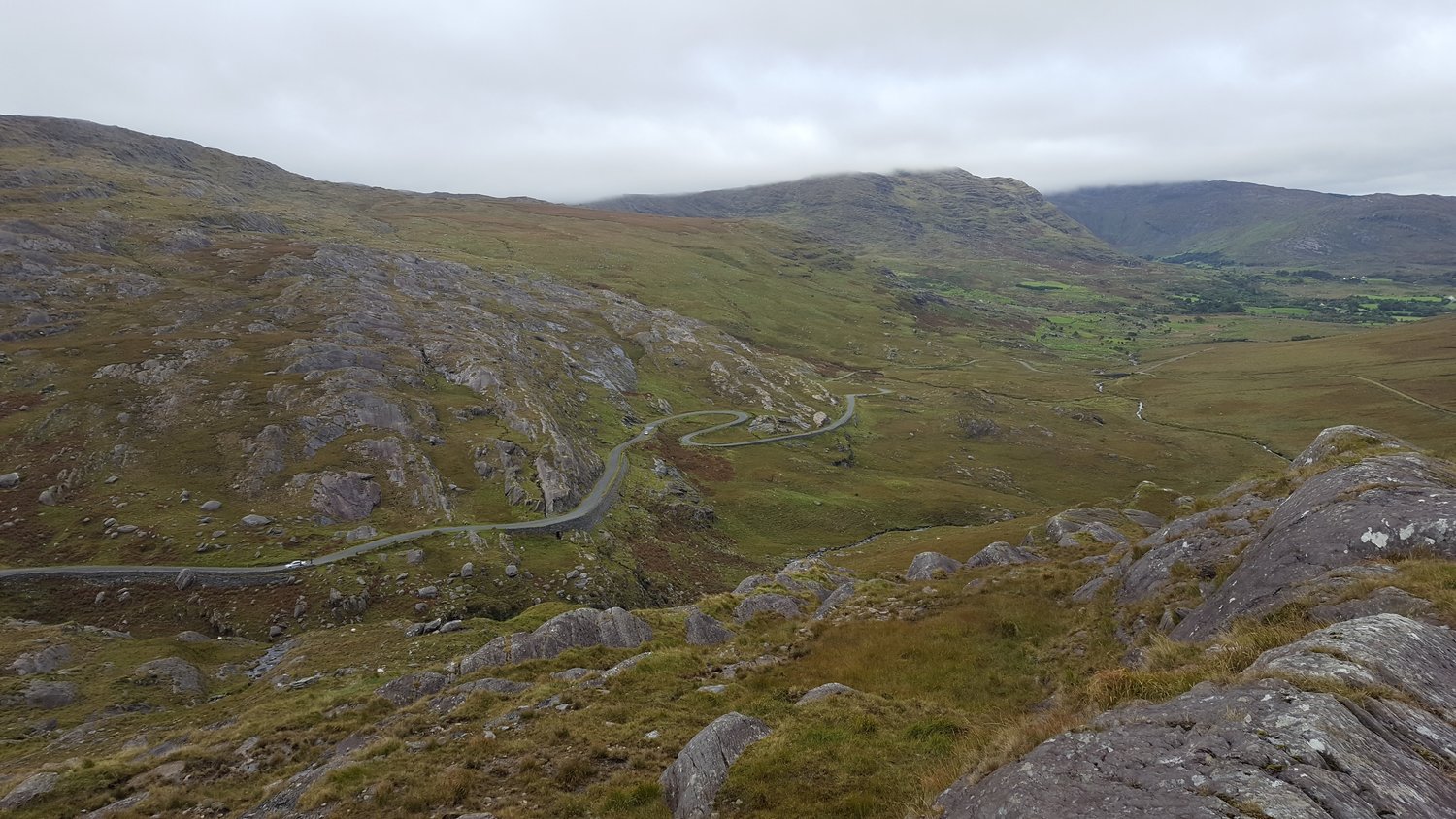
Visitors often ask, “is Ireland easy driving?” The honest answer is yes – provided you allow time, choose the right car and approach the smaller roads with patience. Ireland is made for a road-trip holiday: the big scenery is rarely far from the road, villages make natural stopping points, and a change of plan can lead to the best afternoon of your trip.
The adjustment for many overseas visitors is not the distance between places. It is driving on the left, getting used to narrow rural lanes and accepting that a journey which looks short on a map may deserve more time than expected. Once those expectations are in place, self-driving offers an exceptionally flexible way to see the country.
Is Ireland easy to drive around?
For most confident drivers, Ireland is straightforward rather than difficult. Main roads between cities and larger towns are generally well maintained, clearly signed and comfortable to drive. Motorways are familiar in layout, although you should check whether your planned route includes a toll before setting out. City driving requires more concentration because of bus lanes, one-way systems, pedestrians and limited parking, but it is not essential to drive into every city centre.
The real character of an Irish driving holiday begins beyond the main roads. Coastal routes, mountain passes and country lanes deliver the views people come for, but they are slower. A road may be perfectly passable while still being narrow, winding and bordered by stone walls, hedges or grazing sheep. Treat these roads as part of the experience, not a route to rush through.
A useful rule is to plan fewer miles and more time. If your map suggests a scenic route will take an hour, give yourself longer for photo stops, cafés, viewpoints, tractors, rain showers and the occasional turn-around when a hidden beach catches your eye.
Driving on the left: the first-day adjustment
If you normally drive on the right, the first few kilometres deserve your full attention. The driver sits on the right-hand side of the car, and you keep left on the road. Roundabouts are where visitors need to slow down and think: traffic flows clockwise, and you give way to vehicles approaching from your right.
An automatic car can make the transition easier, particularly if you are not used to changing gear with your left hand. It also lets you concentrate on positioning, mirrors and road signs while negotiating a new environment. If you hire a manual vehicle, take a few quiet minutes in the car park before joining a busy road.
Do not be embarrassed to drive cautiously at first. Leave a little extra space, use your indicators early and let faster local traffic pass when it is safe. Confidence usually arrives quickly after a morning behind the wheel.
Keep an eye on the road edges
On narrow roads, visitors sometimes drift towards the left verge because they are trying so hard to stay on the correct side. Look well ahead rather than fixing your eyes on the hedge or stone wall beside you. Keep a sensible position on your side of the carriageway and slow down before bends.
Many rural routes have passing places or wider gateways. If you meet oncoming traffic where there is not room for both cars, pause at the nearest safe widening point. There is no prize for forcing a tight squeeze, especially in an unfamiliar hire car.
The roads change with the landscape
Ireland’s road network varies greatly, often within the same day. Motorways and national roads are the quickest way to cover ground between regions. Regional roads can be scenic and practical, connecting towns, villages and visitor attractions. Local roads are often the most memorable, leading to dramatic headlands, ancient ruins, walking trails and small family-run cafés.
That variety is why driving is so rewarding, but it also explains why estimated journey times can be misleading. The Ring of Kerry, the Wild Atlantic Way and coastal parts of the Sunny Southeast are not places to treat like a motorway dash. Their appeal is in the detours: a harbour below the road, a ruined abbey in a field or a viewpoint you would never find by following the fastest route alone.
On single-track lanes, be prepared for blind bends and limited visibility. Reduce speed before the bend, not while you are in it. Farm vehicles and cyclists are common, especially during daylight hours and in summer. Give them time and space, and remember that animals may wander onto country roads without much warning.
Speed limits, signs and practical differences
Road signs in the Republic of Ireland are generally in Irish and English. Distances and speed limits are measured in kilometres per hour. In Northern Ireland, signs are in English and distances and speed limits are measured in miles per hour. If your holiday crosses the border, take a moment to reset your expectations rather than relying on habit.
Pay attention to posted limits, especially when entering villages or passing schools. Lower limits can appear quickly, and the safe speed on a winding road may be much lower than the maximum shown. Weather matters too. Rain can reduce grip, sea mist can limit visibility along the coast, and low winter sun can be surprisingly strong.
Before leaving the hire desk, make sure you understand the fuel type, how to operate lights and wipers, and what to do in the event of a breakdown. Ask about the firm’s policy for taking the vehicle between the Republic of Ireland and Northern Ireland if your route includes both. It is a simple check that prevents an avoidable interruption later.
Parking without spoiling the day
Parking is usually easiest in towns, villages and major visitor sites, where designated car parks are common. In busy destinations, arrive earlier in the day or be willing to park a short walk from the centre. This is often more pleasant than trying to find the closest possible space.
Avoid stopping on narrow roads simply because the view is spectacular. A pull-in, formal viewpoint or car park is safer for you and for other road users. Never block a farm entrance, passing place, private driveway or narrow lane. In the countryside, a little consideration goes a long way.
For city visits, consider parking outside the busiest central streets and exploring on foot. You will see more, worry less about restrictions and avoid trying to navigate unfamiliar streets at peak times.
Make navigation work for the holiday you want
A mapping app is invaluable, but the fastest route is not always the best route. It may send you along a road that is technically shorter but misses the very coastline, village or historic stop you hoped to see. Decide whether your priority is arrival time or the journey itself, then plan accordingly.
This is where a guide-led self-drive itinerary earns its place. MyDriveTour combines routes chosen by experienced Irish guides with navigation to your preferred mapping app, automatic audio commentary and useful information at the relevant stop. You remain free to begin where suits you, spend longer at your favourite places and skip anything that does not appeal, while still having the confidence of a thoughtfully planned day. If you would like several routes to choose from, the All Tours collection includes nine self-drive day tours, a Wild Atlantic Way tour and three city walks.
Download commentary and check your phone charge before leaving accommodation, particularly when heading into more remote stretches. A car charger is a small addition that makes a long scenic day considerably easier. It is also wise to keep a little flexibility in the schedule. A rainy morning can become a museum visit, while a bright afternoon might be perfect for a cliff walk or beach stop.
When driving may not be the easy option
Self-driving is not the best fit for every traveller. If you are uncomfortable with unfamiliar roads, do not enjoy driving on the left, or want to spend the day tasting local drinks without appointing a driver, a chauffeur-led experience may be more relaxing. The same applies if your holiday is very short and you would rather leave every logistical detail to someone else.
For families and independent travellers, however, a car offers something special: control. You can leave after breakfast, stop when the children spot a castle, take the quieter road through a village and linger over a sea view without watching the clock for a coach departure.
Ireland rewards unhurried drivers. Take the bends gently, give the landscape time, and let the road lead you towards the places that were never on your original list.
