
Ireland looks compact on a map, but the best roads have a habit of making you stop. A ruined abbey appears around a bend, a beach asks for an unplanned walk, or a village pub turns a quick lunch into a lovely afternoon. To plan an Irish driving holiday well, leave room for these moments while giving each day enough structure to feel relaxed.
The difference between a good self-drive break and a tiring one is rarely the car. It is the route. Set realistic distances, choose places worth lingering in and have reliable guidance ready when you reach them. That is how you get beyond ticking off famous names and start enjoying the country around you.
Start with the coast, not a long checklist
For many visitors, Ireland’s great driving routes are the reason for the trip. The Wild Atlantic Way, Ring of Kerry, North Antrim Coastal Drive and the Sunny Southeast each offer a different kind of day behind the wheel. Trying to combine all of them into one short holiday can mean spending more time repacking bags than seeing the scenery.
Choose one region as the heart of your itinerary. A week in the south-west can comfortably combine Kerry, west Cork and parts of Clare, depending on where you fly into and out of. A northern route can bring together Belfast, the Causeway Coast and the Glens of Antrim. If you have 10 to 14 days, you can join regions together, but it still pays to avoid changing accommodation every night.
Think about the experience you want as much as the landmarks. Kerry is a strong choice for mountain passes, island views and lively heritage towns. The Causeway Coast suits travellers who want dramatic cliffs, geological landmarks and a manageable stretch of road. The south-east offers gardens, historic estates, coastal villages and a gentler pace. There is no single ‘best’ route – it depends on whether your ideal day includes walking, history, food, photography or simply a beautiful drive.
Plan an Irish driving holiday around sensible timings
A two-hour journey on a route planner may become four hours once you include narrow roads, photo stops, a café break and one attraction. That is not poor planning. It is the reality of touring Ireland properly.
As a useful rule, aim for one main scenic drive or one major visitor attraction each day, then add a few smaller stops nearby. If you are travelling with children, build in a beach, playground or easy woodland walk rather than expecting them to enjoy a full day of viewpoints and museums. Couples and groups of friends may prefer a later start and a town-based evening, but should still allow for daylight if travelling outside summer.
Avoid making every day a relocation day. Two or three nights in the same place gives you freedom to take a circular route, return to a favourite pub and change plans if rain moves in. Killarney, Westport, Dingle, Galway, Belfast and Waterford can all work well as bases, depending on your chosen region.
Allow for Ireland’s roads
Motorways connect the major cities efficiently, but the memorable roads are often regional or local routes. They can be narrow, winding and shared with cyclists, walkers, tractors and the occasional sheep. Drive at a pace that feels comfortable, not at the maximum speed shown on a sign.
In the Republic of Ireland, distances and speed limits are shown in kilometres. In Northern Ireland, they are shown in miles. This catches out plenty of visitors crossing the border, especially when they are used to one system. If you hire a car, take a few moments before setting off to understand its controls, fuel type and parking arrangements.
For UK travellers, driving on the left will feel familiar, although road signs and measurements change across the border. For visitors from countries that drive on the right, give yourselves an easy first day after collecting the car. A short route from the airport to a nearby base is far better than beginning with a demanding cross-country drive.
Pick overnight stops with the next day in mind
Accommodation is not simply where you sleep. It determines how much of the road you see when it is quiet, how easily you can park, and whether dinner is a walk away after a day’s driving.
A town or village base is often the easiest choice for a first visit. You have restaurants, shops and fuel nearby, and you can enjoy an evening without getting back into the car. Rural stays offer more peace and often more spectacular views, but check the exact location before booking. A property that looks close to a headline attraction can still be a slow drive away on minor roads.
Book the places that matter most early, particularly for summer weekends, school holidays and popular route hubs. Then keep one or two flexible gaps in your schedule. These are useful for adding an extra night where the weather is best or where you find a part of Ireland you want to explore more deeply.
Build famous sights and local discoveries into the same day
The Giant’s Causeway, Cliffs of Moher and Ring of Kerry deserve their reputations, but a rewarding day should not end at the car park. Look for the nearby harbour, the small heritage centre, the short coastal path or the local viewpoint that provides context as well as a photograph.
This is where expert commentary makes a real difference. You may see a stone ruin and not know whether it was a church, famine-era settlement or estate building. You may pass a village with an extraordinary connection to music, migration or rebellion. Knowing the story turns the road between major attractions into part of the holiday rather than empty mileage.
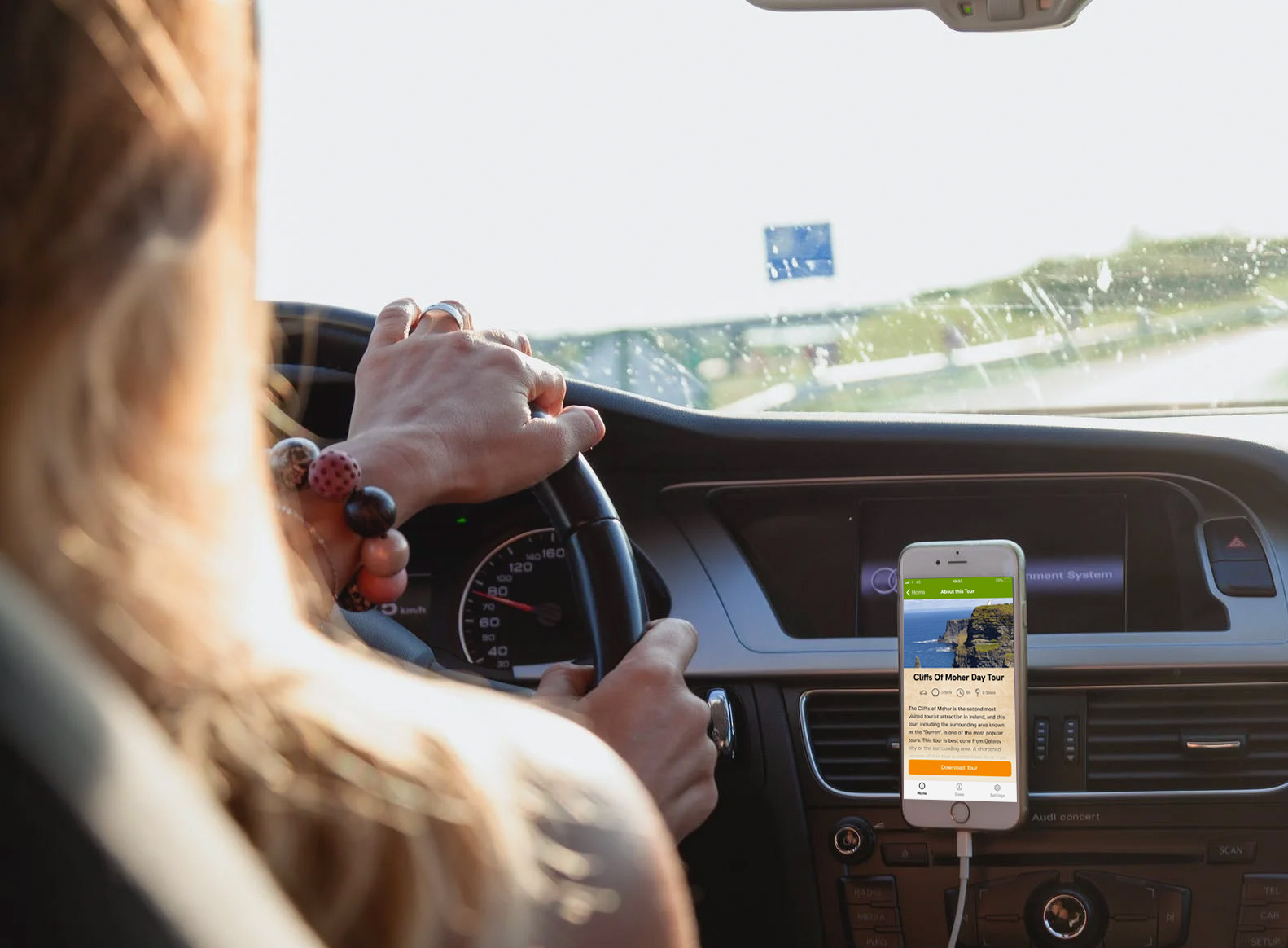
MyDriveTour brings the knowledge of qualified Irish tourist guides and chauffeurs into a self-guided format, with route information, navigation support and audio that plays at relevant points of interest. You remain free to begin where suits you, choose the stops that appeal and spend longer wherever the day takes you.
Do not overbook every attraction
Pre-booking is sensible for a small number of high-demand experiences, especially during peak season. However, a driving holiday needs breathing space. If every hour is tied to a ticket, a delayed breakfast or unexpected traffic can make the whole day feel rushed. Planning several touring days? The All Tours Bundle for €45 gives you a choice of nine day tours, the Wild Atlantic Way tour and three city walks.
Choose one must-do visit, then keep the rest flexible. Check opening times before setting off, particularly on Sundays and outside the main season. Some rural attractions, cafés and visitor facilities operate shorter hours in spring, autumn and winter. Carry water, a light waterproof layer and comfortable shoes in the car, even if the morning begins bright.
Use your phone wisely on the road
Your mobile is one of the most useful tools in the car, but it should reduce stress rather than create it. Download maps and tour content before leaving reliable Wi-Fi, bring a car charger and use a proper dashboard mount if you need navigation visible. The driver should never be searching for the next stop while moving.
Signal can be patchy in remote coastal and mountain areas. Save accommodation details, booking confirmations and key route notes for offline access. It is also wise to tell someone where you are heading if you plan a long walk from a remote trailhead.
Navigation works best when it supports the day rather than dictates it. If a viewpoint is busy, move on and return later. If the rain is heavy on a mountain pass, switch to an indoor attraction or a town with good food and museums. Ireland rewards travellers who can adjust without feeling they have failed the itinerary.
Leave space for the evening
The day does not need to end when you park the car. Some of the strongest holiday memories happen over seafood in a harbour town, a traditional music session, a quiet pint beside a turf fire or an evening walk along a promenade.
Try to arrive at your overnight stop with enough time to enjoy it. That may mean seeing one less castle or skipping a distant detour, but it makes the entire trip more enjoyable. You are not trying to beat Ireland. You are giving yourself time to meet it, one well-chosen road and one unexpected stop at a time.
Planning your own Irish driving adventure? Explore our affordable self-guided tours of Ireland with GPS-guided routes, suggested stops and audio commentary.
