
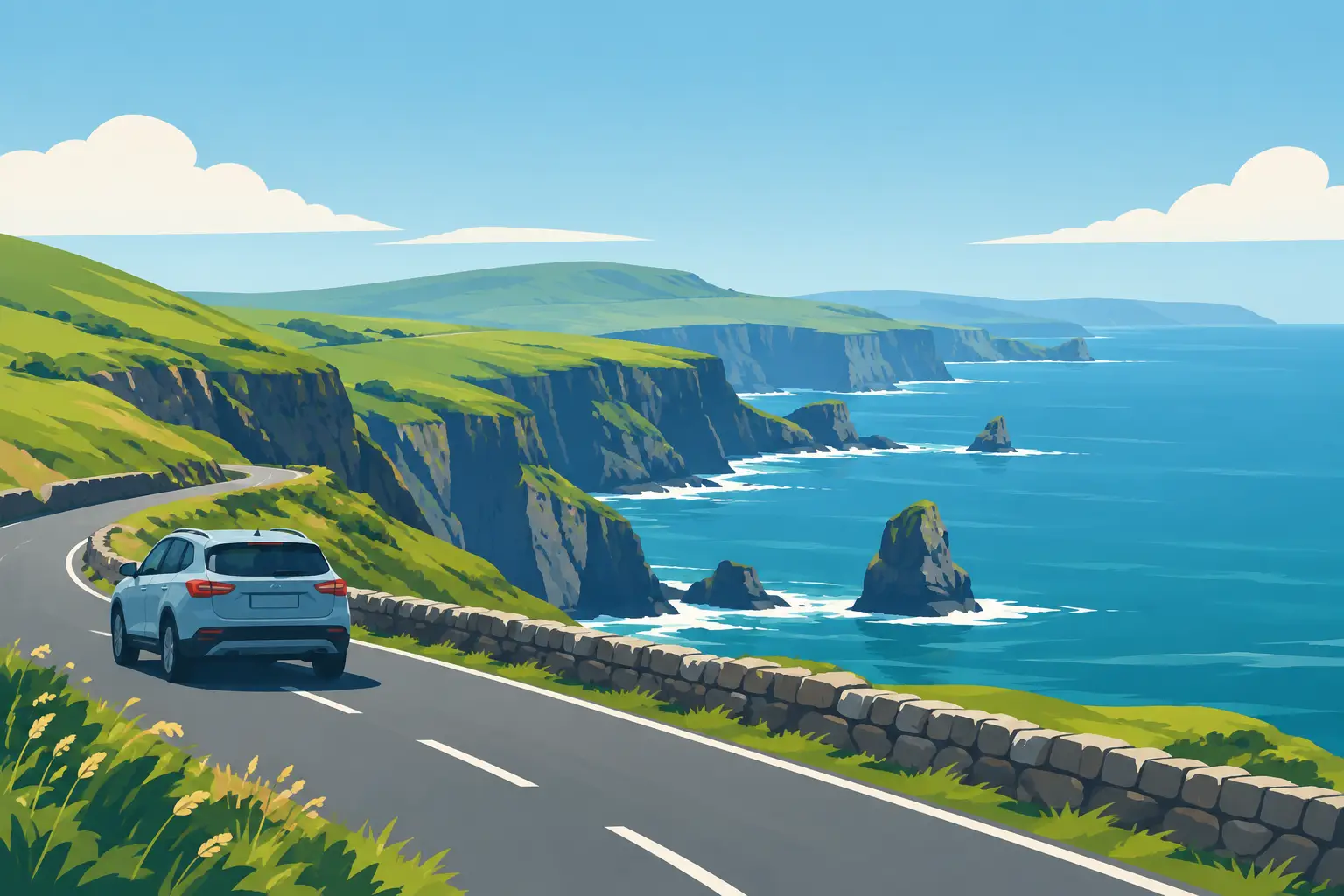
The Wild Atlantic Way is not a route to race through. A Wild Atlantic Way road trip itinerary for 7 days works best when you accept one simple truth: you cannot stop everywhere. Choose a handful of headline places, leave room for a beach walk or village pub, and let the road itself be part of the holiday.
This north-to-south plan follows the coast from Donegal towards West Cork. It is ambitious but achievable for independent travellers who are happy to change accommodation most nights and enjoy a full day of scenic driving. If you would rather spend two nights in each base, focus on either the northern or southern half instead.
Before you set off: make the route work for you
For this itinerary, collect your hire car in Derry, Donegal or Dublin and arrange a different drop-off point in Cork, Kerry or Shannon where possible. A one-way hire can cost more, but it saves a very long return drive at the end of the trip. If you must return to Dublin, allow an extra day or use the final morning for the motorway journey from Cork.
Irish roads demand more time than map estimates suggest. Coastal lanes can be narrow, weather can change quickly, and you will want to pull in for photographs. Keep daily driving to roughly three to four hours where you can, filling the rest of the day with short walks, cafés and visitor attractions. Summer brings longer daylight but busier car parks; spring and autumn are often ideal for quieter roads and dramatic light.
Wild Atlantic Way road trip itinerary: 7 days, north to south
Day 1: Donegal coast – Malin Head, Fanad and Glenveagh
Start in the far north-west, where the Wild Atlantic Way feels raw and wonderfully uncrowded. If your overnight base is in Letterkenny, begin with the drive around the Inishowen Peninsula to Malin Head, Ireland’s most northerly point. The views are broad, windy and exposed, so bring a warm outer layer even on a bright day.
From here, follow the coast towards Fanad Head. Fanad Lighthouse is one of those classic Donegal scenes that earns its reputation, particularly when Atlantic swells are rolling in. Depending on your starting point and daylight, add Glenveagh National Park for its mountain-framed lake and castle grounds. Stay in Letterkenny, Rathmullan or around the Fanad Peninsula.
Day 2: Donegal to Sligo – sea cliffs and surf country
Make Slieve League your principal stop today. These cliffs are among the highest accessible sea cliffs in Europe, and their scale is best appreciated on foot. The road to the visitor area is narrow in places, while the longer cliff walk needs suitable footwear and sensible judgement in wind or mist.
Continue south through Donegal town and towards Sligo. The coastline shifts here, from Donegal’s rugged headlands to long Atlantic beaches and the distinctive profile of Benbulben. Mullaghmore is worth a detour for its harbour, castle views and famously powerful surf. Overnight in Sligo town, Strandhill or Rosses Point, where you can finish with a shoreline stroll as the light fades.
Day 3: Sligo to Mayo – Achill Island and Clew Bay
Leave Sligo after breakfast and travel through north Mayo towards Achill Island. Cross the bridge at Achill Sound and take time for the island’s dramatic western coast. Keem Bay, enclosed by steep green slopes, is a standout stop, though its winding descent is not the place to rush or attempt a careless U-turn.
If time permits, the Atlantic Drive reveals cliffs, deserted-looking beaches and old village ruins. Then make your way back towards Westport, one of the friendliest bases on the route. Its colourful streets, good food and access to Clew Bay make it an easy place to slow down after a long day. Stay in Westport or nearby Newport.
Day 4: Mayo to Connemara – Croagh Patrick, Killary and Kylemore
Today is about mountain-and-sea scenery. You may wish to view Croagh Patrick from Murrisk rather than climb it, as the full ascent takes several hours and is steep underfoot. Continue south alongside Clew Bay and into Connemara, where bog, stone walls, sheep and sharp peaks create a landscape unlike anywhere else in Ireland.
Killary Harbour, Ireland’s only fjord, is a fine place to pause before heading towards Kylemore Abbey. The abbey’s setting below the Twelve Bens is memorable in every season, although a rainy day can make the views feel especially atmospheric. Spend the night in Clifden, Letterfrack or Leenane. Clifden is the liveliest choice, with restaurants and music close at hand.
Day 5: Connemara to Clare – Galway Bay and the Burren
Take the coastal road through Connemara in the morning, perhaps including the Sky Road outside Clifden if conditions are clear. Then travel through Galway city or around its edge, depending on traffic and your appetite for a city break. Galway is enjoyable for lunch and a wander, but do not underestimate the time needed to park and leave again in peak season.
By afternoon, cross into County Clare and the Burren. This limestone landscape can look almost lunar, yet it supports remarkable wildflowers in late spring and early summer. Stop at a small beach such as Fanore, then continue towards Doolin or Lahinch for the night. Doolin suits travellers keen on traditional music; Lahinch offers more accommodation and an excellent beach.
Day 6: Clare to Kerry – Cliffs of Moher, Shannon crossing and Dingle
Visit the Cliffs of Moher early, before coaches and day-trippers arrive. The official paths provide the safest way to enjoy the views, and strong winds may affect access. If the clifftops are lost in cloud, do not linger in disappointment: the Burren, nearby villages and coastal viewpoints can still make a rewarding morning.
From Clare, take the Shannon ferry from Killimer to Tarbert if it suits your timing, then travel across north Kerry towards the Dingle Peninsula. The final stretch is one of the great drives of the Wild Atlantic Way, with mountains rising behind the road and the sea opening ahead. Base yourself in Dingle town for two nights if your schedule allows, or continue after dinner towards Killarney.
Day 7: Dingle Peninsula and the journey to West Cork
Give the Slea Head Drive the morning it deserves. This short loop west of Dingle contains beaches, cliff views, ancient sites and distant Blasket Island scenery. It is also a popular route, so follow the signed direction of travel and be patient behind slower vehicles. Stop selectively rather than trying to photograph every bend.
For a seven-day route, you now face the itinerary’s main trade-off. Travellers who want Ireland’s most famous mountain road should drive towards Killarney and the Ring of Kerry, then finish in Kenmare. Those seeking a quieter coastal finale can continue south-west through Kenmare towards the Beara Peninsula or West Cork, ending in Bantry, Skibbereen or Kinsale.
The Ring of Kerry is deservedly popular, but it needs time and can be congested in high season. Beara and West Cork are less polished, more leisurely and full of small harbours, coves and local character. Neither choice is wrong. Choose the finish that matches your holiday: iconic viewpoints and Killarney National Park, or slower roads and a final taste of coastal Ireland.
A few practical details that make a big difference
Book overnight stays ahead for July and August, particularly in Dingle, Doolin, Clifden and Westport. Outside peak months, flexibility is easier, but smaller properties may operate reduced opening days. Fill the car when you see a convenient fuel station in remote areas, download maps before leaving larger towns, and never rely on mobile signal along the coast.
A guided route on your phone can remove much of the pressure of deciding what comes next. MyDriveTour brings together guide-led local stories, navigation to selected stops and automatic audio commentary, so you can keep your attention on the view rather than constantly reading from a guidebook.
Most importantly, build in permission to change the plan. A clear evening may make you stay longer at a headland; heavy rain may make a museum, a long lunch or an early check-in the better choice. The finest moments on the Wild Atlantic Way often arrive between the places you thought you had come to see.
