
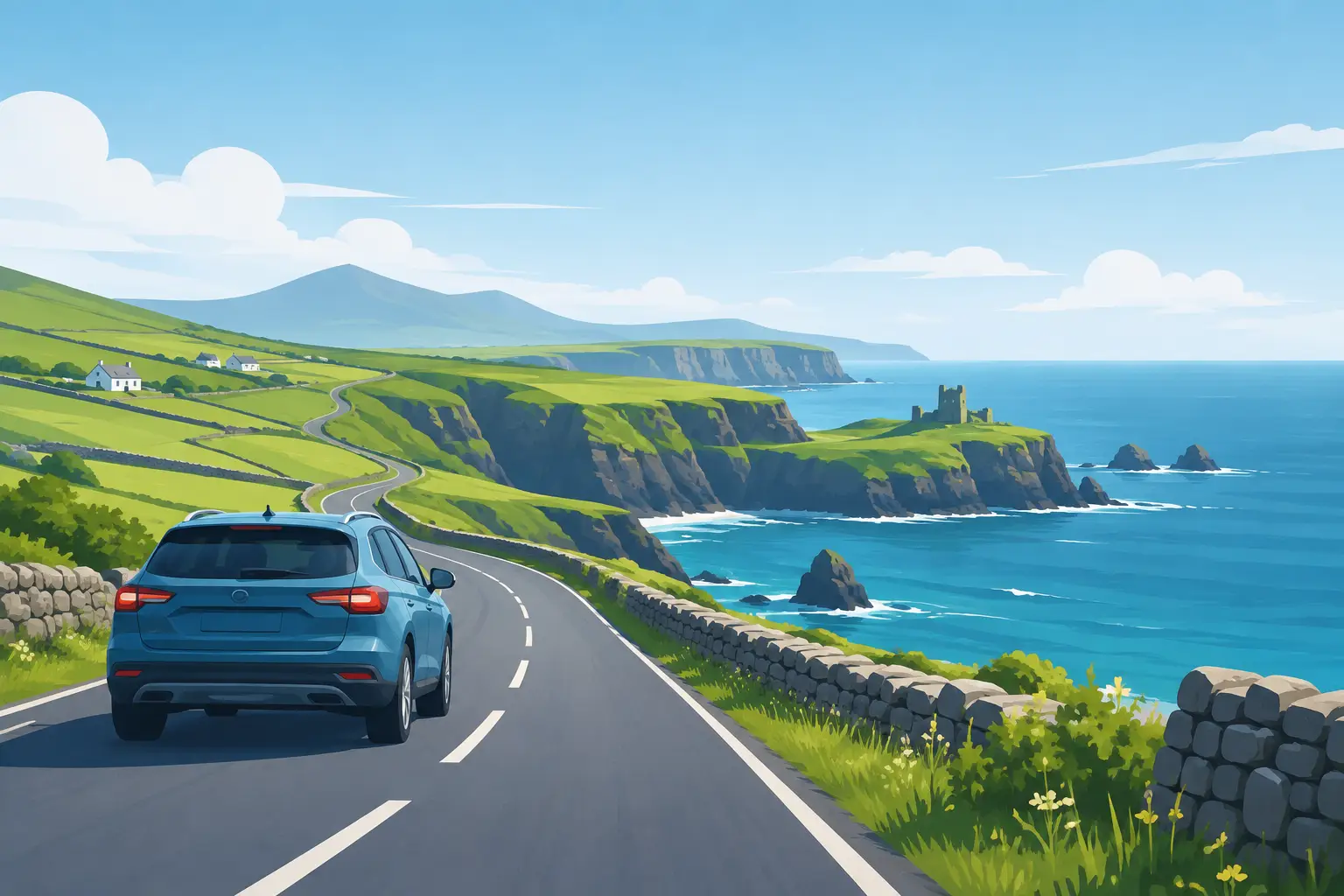
The moment a narrow road opens onto a view of the Atlantic, a self-drive holiday in Ireland stops being about getting from A to B. It becomes about pulling in safely, taking the photograph, hearing the story behind the headland and deciding whether the small harbour ahead deserves an hour or an afternoon. That freedom is exactly why self-drive tours in Ireland are such a rewarding way to travel.
Ireland is made for the unhurried road trip. Famous routes lead to dramatic cliffs, ancient stone forts, colourful towns and beaches that can feel almost private outside peak times. The challenge is not finding things to see. It is choosing a sensible route, knowing what is worth your time and arriving with enough context to make each stop mean more than a pin on a map.
Why self drive tours Ireland suit independent travellers
A coach tour removes many decisions, but it also fixes your timetable. A private chauffeur offers exceptional comfort, but it is a different level of holiday spend. Self-driving sits comfortably in between: you have your own car, your own soundtrack and the freedom to pause when a place captures your attention.
That flexibility matters in Ireland, where weather can change quickly and a short detour can become a highlight. If low cloud hides a mountain view, you can swap the order of your stops. If a village café, craft shop or quiet beach appeals more than a major attraction, you can stay longer. Families can plan around snack breaks and shorter walks, while couples can linger for a late lunch or follow the coast until the light changes.
The trade-off is that independence needs a little structure. Trying to research every road, viewpoint, car park, opening time and local story before you leave can make holiday planning feel like work. A well-designed self-guided tour gives you the confidence of a guide-led day while leaving the decisions in your hands.
Let a route do the hard work
The best Irish driving days have a natural rhythm. There is a clear start, a few standout stops, time for coffee or lunch, and enough space for unplanned discoveries. Packing too much into one day is the easiest way to miss what makes the journey special.
A curated route is particularly useful on touring areas such as the Wild Atlantic Way, the Ring of Kerry, the North Antrim Coastal Drive and the Sunny Southeast. These regions contain headline sights, but they also contain dozens of smaller roads and places that visitors may otherwise pass without realising what is nearby.
Start by choosing the experience you want rather than simply the greatest number of attractions. A coastal day might centre on sea views, a cliff walk and a harbour village. A heritage-focused day may combine monastic ruins, castles and stories of local characters. If you are travelling with children, a route with manageable walks, beaches and regular facilities will usually be more enjoyable than a schedule built around long scenic drives alone.
It also helps to be realistic about Irish road distances. A route that looks short on a map can take longer on winding rural roads, especially when you stop frequently. Allow time to park, walk to a viewpoint and enjoy the location rather than treating every stop as a quick photograph.
Famous sights are better with context
The Giant’s Causeway, the Ring of Kerry and Ireland’s Atlantic cliffs earn their reputations. Yet the experience changes when you understand the landscape, the people who lived there and the events that shaped it. Audio commentary turns a scenic pull-in into a story, whether that story concerns geology, folklore, a historic estate or life along a remote coast.
Context also helps travellers make better choices. You may learn why one viewpoint is worth a short walk, why another is best at a particular time of day, or why a seemingly ordinary village has an extraordinary connection to the wider history of Ireland. This is where qualified tourist guides bring real value. They know that memorable touring is not only about seeing a place, but about understanding why it matters.
Use your phone as your virtual Irish guide
A self-drive tour app should simplify the day, not add another screen to manage. The most useful approach combines a professionally planned itinerary with navigation in your preferred mapping app, then delivers commentary automatically when you reach the relevant location.
With MyDriveTour, travellers can select the stops that appeal to them, begin where it suits their journey and follow turn-by-turn directions without constantly studying a printed route. Geofenced audio commentary starts at the point of interest, so the story arrives when the landscape is in front of you. Additional attraction information can help when you want to check practical details or decide whether to spend more time at a stop.
This is especially helpful when several people are sharing the car. The driver can concentrate on the road, while passengers listen, look out for landmarks and decide which optional stops to include. You are not trying to read a guidebook at a junction or relying on mobile signal to search for a story after you have already driven past it.
Choose flexibility, but plan the essentials
Flexibility works best when the basics are settled before setting off. Download your chosen tour and navigation before leaving accommodation, make sure your phone is charged and bring a car charger. Rural coverage can vary, so it is wise not to depend on a last-minute search for directions or visitor information.
Keep your first and final stops practical. Begin somewhere with straightforward parking and finish close enough to your overnight base that you are not facing a long drive after dark. In winter, shorter daylight hours should influence your plans. In summer, early starts can offer quieter roads and a more relaxed visit to popular locations.
If your route crosses between Ireland and Northern Ireland, check your car hire agreement in advance. Most visitors can travel freely across the border, but hire companies may have their own conditions, insurance requirements or notification procedures. It is a small detail that is much easier to resolve before collection day.
Drive with confidence on Irish roads
For visitors used to driving on the right, the first few kilometres on the left can require concentration. Take your time leaving the hire depot, use a passenger to help with navigation if possible and be particularly alert at roundabouts. A small automatic car is often a comfortable choice for narrow roads and compact village parking areas, though your needs may differ if you have a larger family or plenty of luggage.
On rural routes, expect narrow lanes, blind bends, farm traffic and occasional sheep. Drive to the conditions, not to the maximum speed shown on the sign. Leave room for oncoming vehicles, use designated passing places where provided and never stop in a hazardous position simply because a view looks tempting. There will nearly always be a safer place to pull over a little farther on.
Weather deserves equal respect. Rain can make paths slippery, wind can be strong at exposed coastal sites and mist can hide views that looked clear earlier in the day. Carry a waterproof layer and suitable footwear, even if you intend to spend most of the day in the car. Ireland often rewards prepared travellers with the kind of weather break that makes a coastline glow.
Make room for the places between the landmarks
The strongest self-drive itineraries leave room for surprise. A roadside sign for a historic well, a small gallery in a market town, a traditional music session, or a recommendation from a café owner may become the story you tell most often after the trip.
That does not mean taking every turn at random. Use your main route as the backbone of the day, then let your interests shape the gaps. Food lovers may prioritise local seafood and farm shops. Walkers may spend longer at one coastal trail. History enthusiasts may prefer a quiet ruined church to another busy visitor centre. The benefit of travelling independently is that your holiday can reflect your version of Ireland.
Before you set off each morning, choose one must-see stop, one good place to eat and one optional detour. With those three decisions made, you have enough direction to travel confidently and enough freedom to follow the road when Ireland offers something unexpected.
