
The road between Belfast and Derry-Londonderry can turn a straightforward journey into a full day’s adventure. One minute you are following the curve of a quiet bay; the next, basalt cliffs, ruined castles or a rope bridge are asking you to stop. This Causeway Coast visitor guide helps you enjoy Northern Ireland’s most dramatic coastal route at your own pace, with enough structure to make every mile count.
Start with the route, not just the Giant’s Causeway
The Giant’s Causeway is rightly famous, but it is only one stop on a coast with far more to offer. The classic Causeway Coastal Route runs from Belfast to Derry-Londonderry, though many visitors concentrate on the stretch from Larne to Portstewart. Allow a full day for the headline sights, or two to three days if you want time for beaches, glens, village cafés and walks.
Driving north from Belfast is the most natural choice for many visitors arriving by ferry or flying into Belfast. Larne marks the beginning of the official coastal route, where the scenery quickly becomes more varied. If you are based in Portrush, Ballycastle or Bushmills, you can simply join the route nearby and tour in either direction.
There is no single correct order. It depends on your accommodation, the weather and whether you prefer to see the Giant’s Causeway early or save it for later afternoon. What matters is resisting the temptation to tick off too many places. The coast rewards unhurried stops.
The stops worth planning around
The Glens of Antrim and Cushendun
From Larne, the road threads through the Glens of Antrim, a series of green valleys that meet the sea. Glenarm is a pleasant early pause, with a historic village feel, while Carnlough has a small harbour and a wonderfully atmospheric waterfront. These are not merely places to drive through – they show the gentler, lived-in side of the coast.
Cushendun deserves a little extra time. Its whitewashed cottages and sheltered setting make it a quiet contrast to the busier attractions ahead. The nearby caves are a short walk from the village and have become familiar to television viewers, but their appeal is still the raw coastline itself.
Torr Head or the main coastal road?
At Cushendun, adventurous drivers may consider the Torr Head Scenic Route. It delivers extraordinary views towards Scotland on a clear day, but this is not a shortcut. The road is narrow, steep in places and demanding, with limited passing opportunities.
Choose it only if you are comfortable on single-track roads, conditions are good and you have time to spare. Larger vehicles and nervous drivers are better served by staying on the main A2. This is one of the key trade-offs on the Causeway Coast: the most dramatic detour is not always the most relaxing one.
Ballycastle, Carrick-a-Rede and Ballintoy
Ballycastle is a useful place for fuel, food and a beach walk before continuing west. From here, the coast becomes increasingly familiar from postcards and film locations. Carrick-a-Rede Rope Bridge is a memorable stop for visitors happy with heights and a walk, but it can be busy and access arrangements may vary by season. Check ahead, particularly during school holidays.
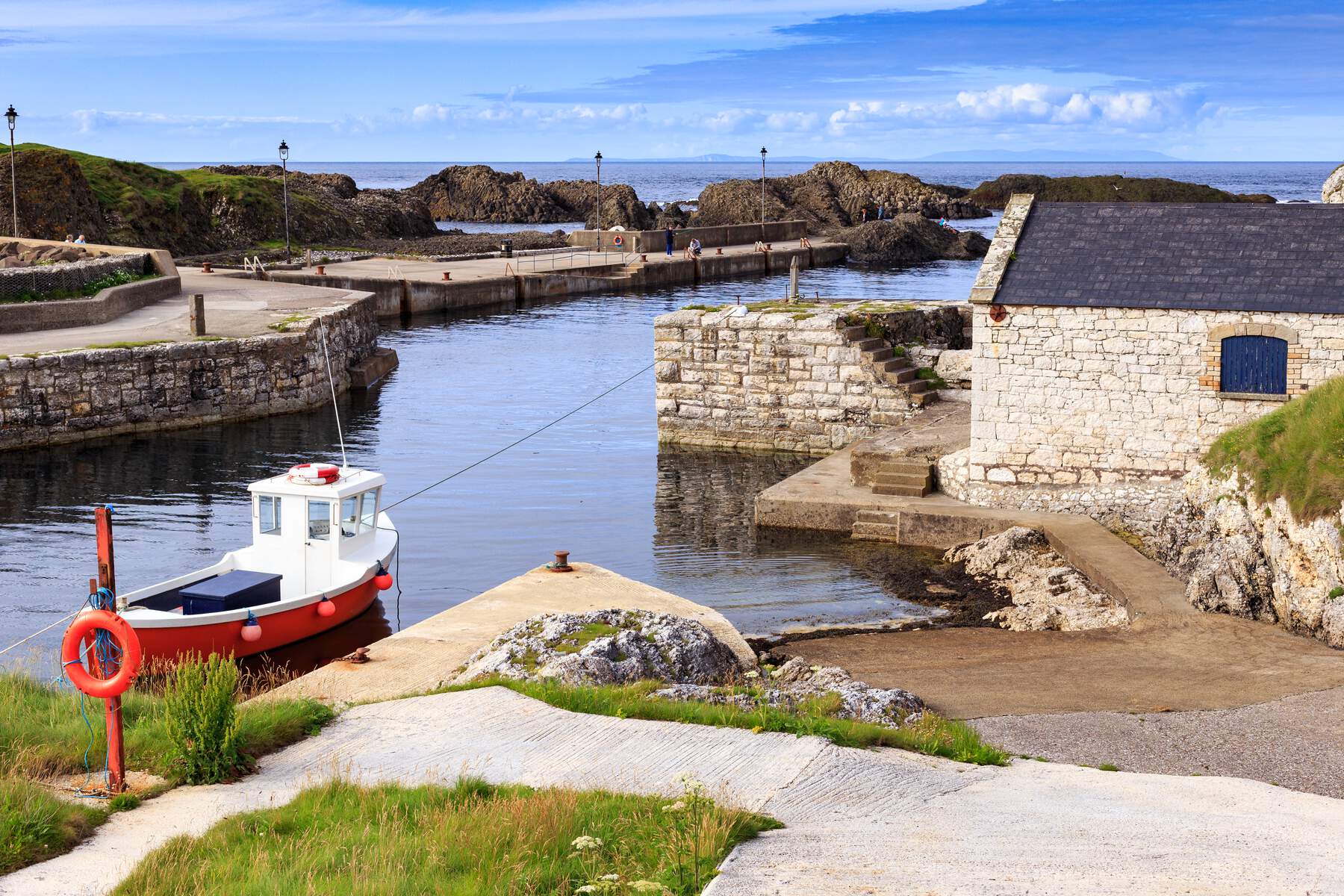
Even if the bridge is not for you, the surrounding headland is spectacular. Ballintoy Harbour, a little farther on, is another excellent pause. The approach road is steep and narrow, yet the small harbour, dark rocks and open sea make it one of the coast’s most photogenic locations.
The Giant’s Causeway
The Giant’s Causeway is a geological wonder made of interlocking basalt columns, formed by ancient volcanic activity. Local storytelling offers a more entertaining explanation: the giant Finn McCool built a causeway to Scotland to challenge his rival, Benandonner. The best visit makes room for both versions.
Arrive early, late, or outside peak summer hours if you can. The main stones are reached on foot, and the uneven surface calls for sturdy shoes with grip. Weather changes quickly here, so bring a waterproof layer even when the forecast looks kind. Parking and visitor facilities are available nearby, but the site is often busiest in the middle of the day.
Take time to walk beyond the first viewpoint. The Organ, the Chimney Stacks and the cliff paths reveal why this UNESCO World Heritage Site is more than a quick photograph. Keep to marked paths, especially in high winds.
Dunluce Castle, Portrush and Portstewart
Dunluce Castle appears almost improbably placed on its clifftop, separated from the mainland by a steep ravine. The ruins are dramatic from every angle, and a visit offers a proper sense of the families, battles and storms that shaped this exposed place. Allow longer than you expect if you enjoy history or photography.
Portrush is a lively seaside base with restaurants, shops and several beaches nearby. It suits travellers who want accommodation and evening options after a day on the road. Portstewart, a short distance west, feels calmer and is known for its long strand and wide coastal views.
If your journey continues towards Derry-Londonderry, make time for Mussenden Temple and Downhill Demesne. The small temple sits near a cliff edge above a sweeping beach, creating one of Northern Ireland’s defining views. It is particularly rewarding in lower light, when the landscape feels less crowded and more elemental.
Practical advice for a better Causeway Coast drive
Distances are modest, but the journey takes longer than a map suggests. Coastal roads, scenic pull-ins, slow-moving traffic and spontaneous stops all add time. For the core route from Larne to the Giant’s Causeway, plan at least five to six hours with only a few stops. Add Dunluce, Portrush and Mussenden Temple, and a full day becomes more realistic.
Drive on the left and remember that many rural roads are narrower than visitors expect. Use designated lay-bys to stop for photographs rather than pulling onto the verge. In summer, begin early and be patient around popular car parks. The reward for travelling outside the busiest window is not only easier parking, but a stronger sense of place.
Northern Ireland uses pounds sterling. Mobile coverage is generally good, but it can weaken in more remote glens and along exposed sections of coast. Download maps and any tour content before setting out, carry a charging cable, and do not rely on a last-minute signal to make decisions.
Weather is part of the experience here. Sea mist can arrive quickly, cliff paths can become slippery, and a sunny morning can become a wet afternoon. Layers, waterproof footwear and a warm top belong in the car in every season. Winter brings quieter roads and moody light, while spring and early autumn often offer a comfortable balance of daylight and fewer visitors.
Let the coast set the pace
A self-guided tour works especially well on the Causeway Coast because every traveller wants something slightly different. Families may spend longer at beaches and harbour walls. History lovers may linger at Dunluce Castle and old village churches. Film fans may seek recognisable locations, while others simply want a quiet walk with sea air and no timetable.
MyDriveTour brings the knowledge of qualified Irish tourist guides and chauffeurs into your car, with route guidance and automatic audio commentary at the places where the story matters. You can begin where it suits you, choose the stops that interest you, and still travel with the confidence that you have not missed the local context behind the view. The North Antrim Coastal Drive is included in the All Tours Bundle, a useful option if your holiday also takes you to other parts of Ireland.
Leave a little space in your schedule for the unplanned stop: a harbour where fishing boats are coming in, a roadside viewpoint after rain, or a village bakery just when you need it. The Causeway Coast is at its best when the journey feels like your own.
