
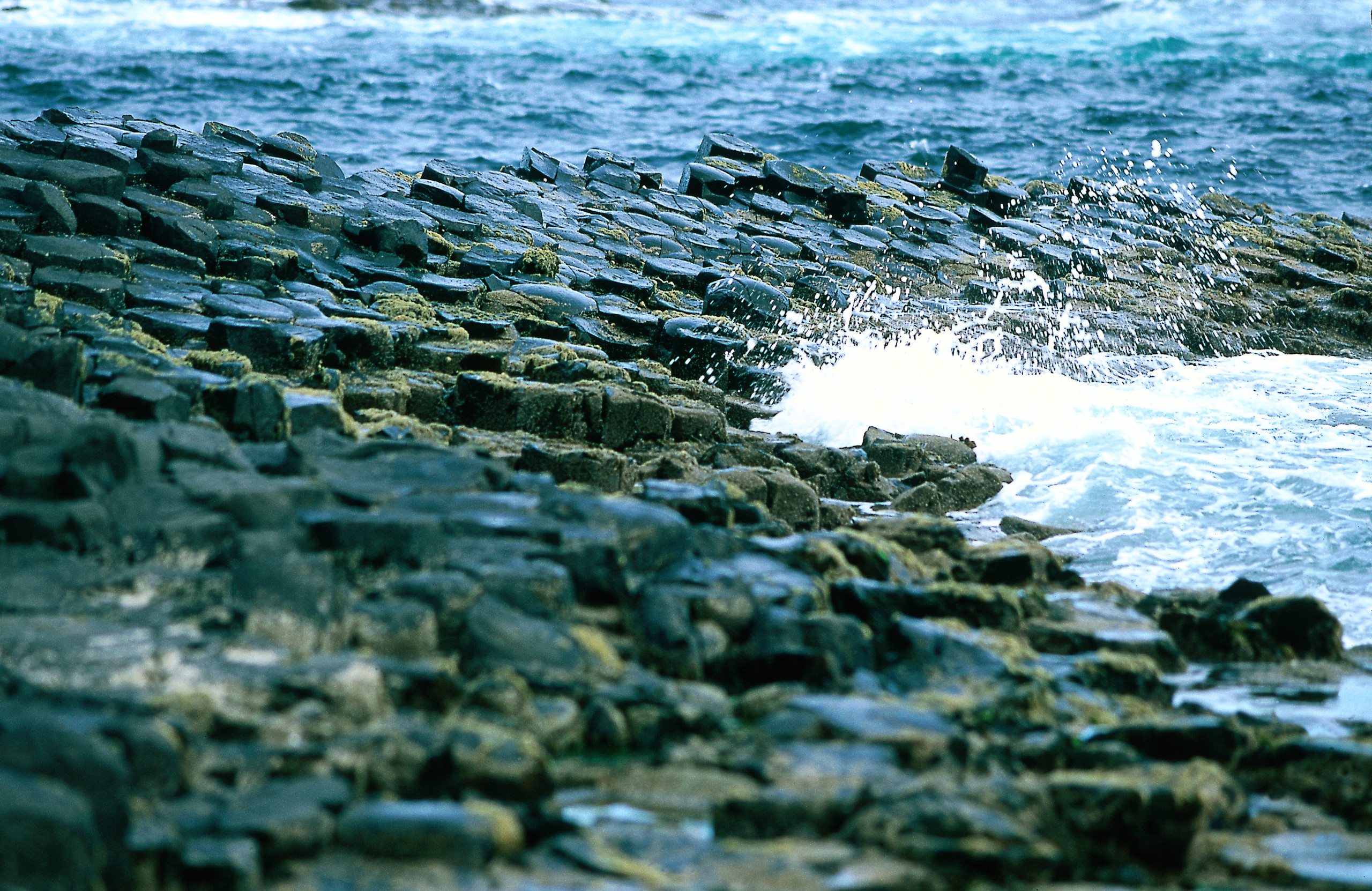
The basalt columns at Giant’s Causeway may be ancient, but the question facing most modern visitors is immediate: where do you leave the car? Good Giant’s Causeway parking advice can make the difference between arriving relaxed and spending precious North Antrim Coastal Drive time circling busy roads. This is one of Ireland’s best-known natural sights, and its car park is understandably in demand when the weather is fine, school holidays are under way or tour coaches are arriving.
The simplest approach is to plan parking as part of your route, rather than treating it as a quick stop between Bushmills and Ballintoy. Give yourself time for the walk down to the stones, the return uphill and a proper look around the coastline. The Causeway rewards unhurried visitors.
Where should you park at Giant’s Causeway?
For most people, the official Visitor Experience car park beside the Giant’s Causeway Visitor Centre is the practical choice. It is close to the main facilities and the established pedestrian route down to the shore. It also puts toilets, refreshments, interpretation and accessibility assistance within easy reach, which is particularly useful for families, visitors with limited mobility and anyone arriving after a long drive.
Parking arrangements, charges, opening hours and booking options can change by season, event day and operational requirements. Check the official visitor information shortly before travelling, especially if you are visiting in summer or over a bank holiday. Do not assume that arrival guarantees a space, or that a previous traveller’s parking price still applies.
The Visitor Centre car park is not directly beside the famous columns. From there, you still need to travel downhill towards the coast on foot or, when operating, use the visitor transport service. That is part of the experience, but it matters if somebody in your party finds slopes difficult, has a buggy or needs to manage energy carefully.
Is roadside parking a good idea?
Usually, no. The roads around the Causeway are narrow, busy and vital for local access, emergency vehicles and coaches. Parking where it is prohibited, on verges or in passing places is unsafe and can cause a genuine problem for residents and other road users. A tempting space beside the road can leave you with a long, exposed walk on roads without a suitable footpath.
There are other public parking locations and trail access points in the wider area, but they are not interchangeable with parking at the Visitor Centre. They may involve a longer coastal walk, limited spaces, uneven ground or no facilities. They can work well for experienced walkers who have chosen a specific route, but they are not a shortcut for a first visit to the stones.
If you are planning to walk part of the Causeway Coast Way, study the route and return transport before leaving your car. A spectacular clifftop walk is far more enjoyable when you know where you will finish, rather than realising late in the day that you have several miles to retrace.
Giant’s Causeway parking advice for busy days
The most useful tactic is simple: arrive early or visit later in the afternoon. Mid-morning to mid-afternoon is generally the busiest window, particularly from late spring through early autumn. Coaches, organised day trips and independent drivers often converge at similar times, and a sunny forecast can bring extra demand at short notice.
An early arrival offers more than a better chance of parking. The light can be beautiful along the coast, the paths are quieter and the unusual geometry of the columns is easier to appreciate without feeling rushed. Later visits can be equally rewarding, although you must leave enough daylight for the return walk and drive. North Coast roads are scenic but require concentration, particularly after rain or in fading light.
Build a little flexibility into your day. If the main car park is busy, do not let frustration set the tone for the rest of the tour. Continue to a nearby planned stop, enjoy a coffee in Bushmills or take in a viewpoint, then return when pressure may have eased. A self-drive day works best when it has a clear structure but is not tied to a minute-by-minute timetable.
Before setting out, make sure you have these practical details settled:
- the Visitor Centre’s current parking and opening arrangements;
- enough time for the downhill and uphill walk, not just the photographs;
- suitable footwear for wet, uneven coastal surfaces;
- a charged mobile phone and offline or reliable navigation for the surrounding route.
Allow more time than the parking sign suggests
It is easy to underestimate Giant’s Causeway because the headline attraction is compact. In reality, the site has several layers. There is the approach through the Visitor Centre area, the descent to the shore, the columns themselves, the views towards the headlands and, for many visitors, a walk along the clifftop paths or towards nearby formations such as the Chimney Stacks.
For a straightforward visit, allow at least 90 minutes from parking to departure. Two to three hours is more comfortable if you want to browse the visitor facilities, take the shuttle where available, explore beyond the main columns or simply wait for a quieter moment on the rocks. Add more time if you are combining the Causeway with a coastal walk.
The return climb catches out people who have focused only on getting down to the sea. It is manageable for many visitors at an easy pace, but it is not a flat promenade. Wear shoes with grip rather than sandals or smooth-soled footwear. Basalt can be slippery after rain, and sea spray can make the lower rocks treacherous even on an otherwise dry day.
Parents should also consider the terrain rather than relying on a buggy alone. Some paths are suitable, but the stone formations themselves are irregular and require close supervision. Children usually love the place, particularly once they hear the Giant Finn McCool story, but it is a landscape to explore carefully rather than a playground.
Accessibility and visitor transport
The Visitor Centre is the best starting point for guests who need accessible facilities or advice tailored to the day’s conditions. Staff can explain the most suitable route and whether visitor transport is running. Availability can vary, so it is wise to check in advance rather than planning your whole visit around it.
Blue Badge parking and drop-off arrangements may be available, but these too can change. Contact the site directly before travelling if access is central to your plans. The right preparation is worthwhile here: it helps everyone in your group enjoy the coastline without an avoidable logistical worry.
Remember that accessibility at the Visitor Centre and accessibility on the rock formations are different things. You can have a very satisfying Giant’s Causeway experience from the paths and viewpoints without needing to step across every column. The scale of the coast, the sound of the Atlantic and the distinctive dark shapes of the basalt are memorable from more than one vantage point.
Make parking part of a better North Coast drive
Giant’s Causeway sits naturally within a full North Antrim coastal day, but it should not be squeezed between too many ambitious stops. The roads reward a slower pace, and parking can take longer at popular places than map estimates suggest. Bushmills, Dunluce Castle, Carrick-a-Rede and the villages along the coast all deserve their own allowance for arrival, walking and enjoying the view.
A sensible direction for many travellers is to approach via Bushmills, visit the Causeway, then continue east along the coast. That avoids doubling back and leaves the dramatic cliff and sea views ahead of you. However, the best order depends on where you are staying, the time of year and which attractions you have booked. If a timed entry is fixed elsewhere, build your route around that commitment first.
This is where a guide-led self-drive itinerary earns its place. MyDriveTour helps visitors follow a logical route at their own pace, with navigation, local stories and audio commentary arriving where they are useful rather than all at once. You remain free to spend longer at the Causeway, skip a stop or pause for a village lunch, while still having the confidence that the day fits together.
A calmer way to arrive
Do not race to Giant’s Causeway simply to secure the closest available space. Check current arrangements, aim outside the peak arrival period, park responsibly and allow enough time to enjoy the walk as well as the columns. When you treat the journey down to the shore as part of the attraction, the practicalities become much easier – and the Causeway feels far less like a box to tick.
