
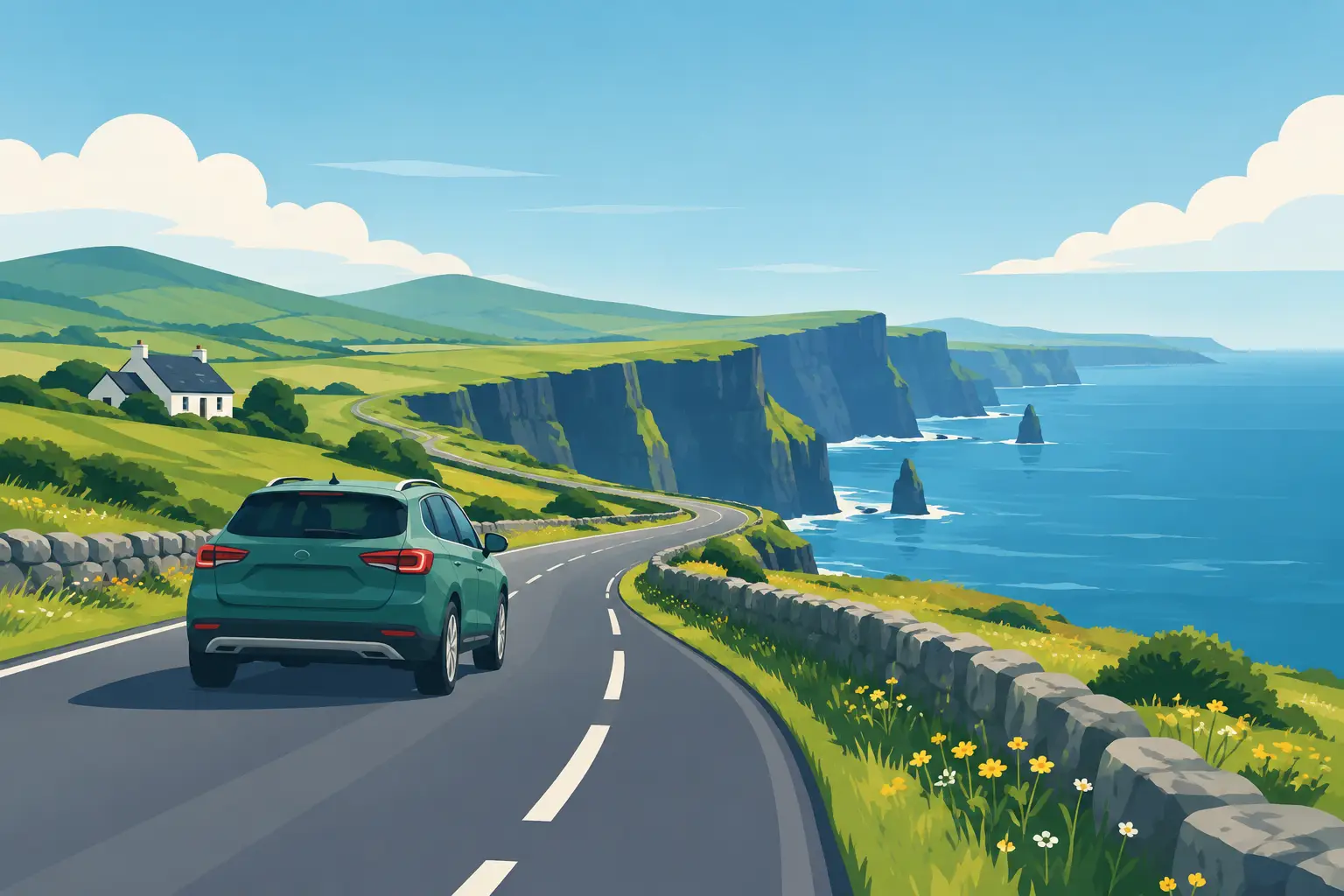
Ireland is made for the kind of holiday where the next great view is just around a bend in the road. But the best Irish road trips are not simply about covering miles between famous landmarks. They are about knowing when to stop for a harbour village, a ruined abbey, a quiet beach or a story that gives the landscape meaning.
For independent travellers, that freedom is the appeal. You can set your own pace, linger where the scenery is at its finest and skip anything that does not suit your group. The challenge is avoiding a day spent staring at a map, missing worthwhile places because you did not know they were there, or arriving at the main attraction after the light has gone.
What Makes Irish Road Trips So Rewarding?
Ireland is compact enough to make a self-drive holiday feel achievable, yet varied enough that each region has its own character. Within a few hours, you can travel from dramatic Atlantic cliffs to green valleys, historic towns and lively coastal pubs. The journey is often as memorable as the destination.
That said, Irish roads reward a sensible approach. Major routes are straightforward, but many of the most scenic stretches are narrow and winding, with stone walls, sheep, cyclists and farm traffic all part of the experience. Allow more time than the map suggests, particularly on coastal drives and in summer. A slower schedule makes room for photographs, coffee stops and the unplanned detours that often become the highlight of a holiday.
The weather is another reason to stay flexible. A misty morning can clear into a bright afternoon, while a blue-sky view can disappear behind Atlantic rain in minutes. Pack layers, keep waterproofs accessible and treat changing conditions as part of the Irish countryside rather than a reason to rush on.
Choose a Route That Matches Your Holiday
There is no single best route for every traveller. Families may prefer shorter driving days with beaches, castles and places to eat nearby. Couples may want a scenic loop with time for village stays and evening walks. First-time visitors often enjoy combining headline sights with smaller places that reveal the rhythm of local life.
The Wild Atlantic Way for Big Coastal Scenery
The Wild Atlantic Way is ideal for travellers who want cliff roads, sea views and a sense of scale. It runs along Ireland’s western coast, so it is best tackled in sections rather than treated as a race from one end to the other. Done well, a few days in Kerry, Clare, Connemara or Donegal can feel far richer than trying to complete the entire route.
Choose a base for two or three nights when possible. This reduces packing, gives you a better chance of revisiting a viewpoint in improved weather and leaves space to follow local recommendations. The Ring of Kerry is rightly popular, but neighbouring valleys, islands and lesser-known viewpoints can provide the quieter moments many visitors are looking for.
Northern Antrim for Coast, Causeway and History
Northern Ireland’s Antrim coast packs a remarkable amount into a manageable distance. The road between Belfast and the Giant’s Causeway brings together rugged headlands, castle ruins, beaches and villages with strong local character. It works particularly well for visitors who have limited time but still want a full day of changing scenery.
The Giant’s Causeway deserves its place on the itinerary, but it should not be the only stop. Allow time for the coast itself, where a short walk or a pause above the shoreline can be just as striking. Starting early, or travelling outside peak visitor hours, can make this area feel far more relaxed.
The Sunny South-East for a Gentler Pace
If your ideal drive includes heritage towns, gardens, beaches and food stops, the Sunny South-East is an excellent choice. Counties such as Wexford, Waterford and Kilkenny offer a different style of Irish road trip: less about vast mountain passes and more about layers of history, attractive towns and easy-going coastal scenery.
This region suits a mixed-age group or anyone who wants to balance driving with time on foot. You can visit a medieval street, take a coastal walk and sit down to a good lunch without spending the entire day in the car.
A Better Way to Plan an Irish Driving Day
A successful day is usually built around fewer stops than visitors first expect. Pick one main attraction, then add two or three nearby places that genuinely interest you. This gives the day shape without turning it into a timetable.
It also helps to decide what kind of day you want before you choose the route. Is it a scenery day, a history day, a family day or a day for towns and local food? Once you know the answer, the right stops are easier to identify. A castle, a cliff walk and a museum might all be excellent, but fitting all three into one long driving day can leave little time to enjoy any of them.
Navigation matters too. Mobile mapping is familiar and useful, but it does not tell you why a viewpoint matters, where an overlooked monument is hiding, or which road makes the journey more enjoyable. That is where guide-led route planning adds real value. It combines practical directions with the context that turns a passing view into a memorable place.
MyDriveTour brings professionally curated Irish touring knowledge into a self-guided mobile experience. You can follow a planned route through your preferred mapping app, choose the stops that suit you and hear audio commentary automatically as you reach points of interest. It is a practical companion for travellers who want the independence of driving themselves with the reassurance of local guide insight.
Leave Room for the Places You Did Not Plan
The most shareable holiday photographs are not always taken at the most famous attraction. They may come from a roadside viewpoint with no coach park, a small pier where fishing boats are coming in, or a lane that opens unexpectedly onto the sea. Ireland still offers these moments, especially when you are not committed to a rigid group schedule.
This does not mean driving aimlessly. It means giving yourself permission to pause. If you see a village market, a signed beach or a historic church that catches your attention, check whether it fits the day and take the turn. A self-drive holiday should feel like your own journey, not a sequence of boxes to tick.
At the same time, use good judgement. Park only where it is safe and permitted, respect private land, keep gateways clear and take care on exposed coastal paths. Small choices help protect the places that make Ireland special.
Practical Tips Before You Set Off
Book key overnight stays early if you are travelling during school holidays, bank holiday weekends or major events. Popular coastal areas can fill quickly, and a well-located base can save a surprising amount of driving. If you are collecting a hire car, check whether it is suitable for your planned route and make sure everyone who may drive is covered.
Keep your first day light. After a flight, collecting a car and adjusting to driving on the left, a short scenic route is more enjoyable than a demanding cross-country journey. Build confidence before tackling narrow mountain roads or busy town centres.
Download any maps, route information and audio you may need before leaving reliable Wi-Fi. Mobile coverage is good in many areas but can weaken in remote valleys and along parts of the coast. A charged phone, car charger and a passenger who can help with directions will make the day much easier.
Finally, do not measure your holiday by the number of counties crossed. One beautifully paced day on the coast, with time to listen, look and stop, will stay with you longer than a hurried circuit of every landmark on the map. Start with a route that interests you, allow the road to surprise you, and let Ireland reveal itself one worthwhile stop at a time.
