
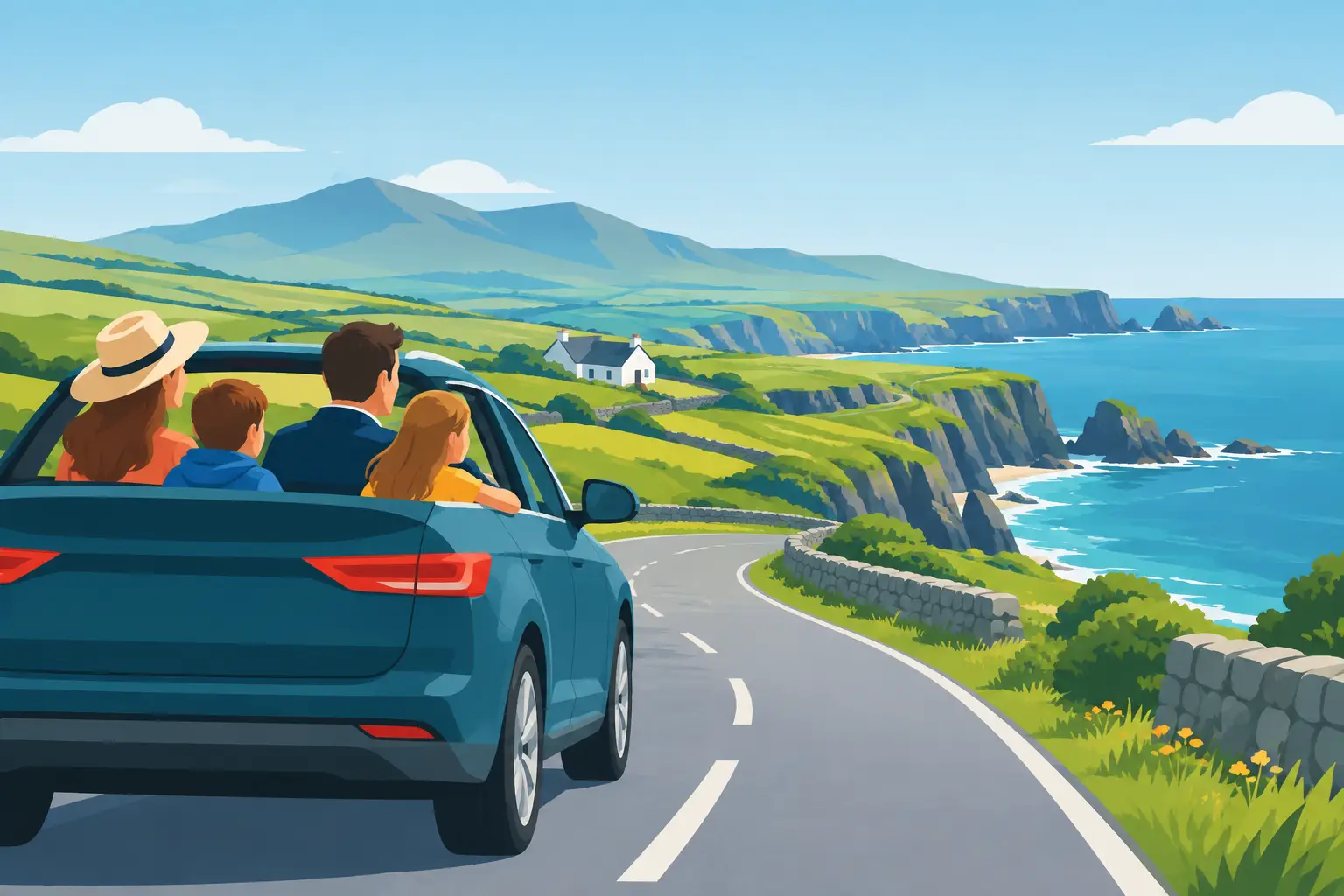
A family self-drive holiday in Ireland works best when the journey feels like part of the adventure, not a logistical challenge between attractions. One morning can begin with sea views and a ruined castle, then lead to a beach, a village lunch and a short woodland walk before bedtime. The key is giving your family enough structure to travel confidently, while leaving room for the unexpected stop that becomes everyone’s favourite memory.
Why Ireland suits a family self-drive holiday
Ireland is made for touring at your own pace. Distances can look modest on a map, but the most rewarding roads are rarely the fastest. A coastal route may take you through fishing villages, mountain passes and viewpoints where the children can stretch their legs. That slower rhythm is a strength, provided you plan for it.
A car gives families the freedom that a fixed coach itinerary cannot. You can start later after a difficult night with younger children, skip a stop if the weather closes in, or spend longer at a place that captures their imagination. It also makes practical life easier: coats, snacks, pushchairs and spare shoes can travel with you rather than being carried all day.
Ireland’s best-known touring regions offer plenty of variety. The Wild Atlantic Way brings dramatic cliffs, beaches and harbour towns. The Ring of Kerry combines lakes, mountains and heritage sites. In Northern Ireland, the North Antrim Coastal Drive offers castle stories, striking coastline and the Giant’s Causeway. The Sunny Southeast is often a gentler choice for families who enjoy gardens, beaches and historic towns without trying to cover too much ground.
Choose fewer bases, not more hotel check-ins
The most common family road-trip mistake is trying to see all of Ireland in one holiday. It can be done on paper, but it means packing every morning, spending long periods in the car and arriving at places just as children are tired. A better plan is to choose two or three overnight bases and explore each area properly.
For a week-long trip, two regions are usually enough. You might combine Dublin and the east coast with the Sunny Southeast, or spend the whole week in the west around Galway, Clare and Kerry. With ten to fourteen nights, you have more scope to cross the country, but even then, build in longer stays rather than changing accommodation every night.
When choosing a base, consider more than the headline attraction. A town with a supermarket, casual places to eat, parking and a nearby playground can make evenings much easier. Self-catering accommodation can be particularly helpful with younger children or dietary requirements, while a family-friendly hotel may be worth the extra cost when everyone needs a reliable dinner and an early night.
Let driving days stay realistic
On Irish roads, a two-hour route can easily become four hours once you include a scenic viewpoint, roadworks, a café stop and the inevitable request for a beach detour. Plan one main activity each day, then treat everything else as optional.
A useful rhythm is to travel in the morning, stop for lunch somewhere with space to move about, and keep the afternoon flexible. If you are travelling with teenagers, longer days may be welcome when there is a clear reward at the end, such as a surf lesson, boat trip or lively town. For younger children, a short drive followed by time outdoors is often the better bargain.
Build each day around stops children will enjoy
Ireland is rich in history, but children do not need a string of formal heritage visits to connect with it. Mix landmark attractions with places where they can run, climb, paddle or simply eat an ice cream looking at the sea.
Castles work especially well when there is a story attached: a siege, a hidden passage, a pirate connection or a local legend. Beaches provide an easy reset on a busy touring day, even when the weather is not warm enough for swimming. Bring waterproofs and wellies, and a blustery walk can be just as memorable as a sunny afternoon.
Animal farms, forest parks, aquarium visits and short boat trips are useful anchors too. They give children something to anticipate and prevent the holiday becoming a series of adult-led photo stops. If a family member has reduced mobility, look for attractions with straightforward parking, accessible paths and facilities nearby before setting out.
There is also value in leaving room for smaller discoveries. A roadside craft shop, a village bakery or a quiet pier may not appear in a guidebook’s top ten, but these are often the places that make a trip feel personal rather than programmed.
Know the practical driving differences
For visitors from Great Britain, driving on the left will feel familiar, but Ireland still requires attention. Roads outside cities can be narrow, winding and lined with stone walls or hedges. Take your time, especially on rural routes where local drivers may know every bend and visitors do not.
The Republic of Ireland uses kilometres per hour, while Northern Ireland uses miles per hour. Pay close attention when crossing the border and do not rely solely on what your hire car display suggests. Speed limits, parking rules and toll arrangements can vary, so check these with your car-hire provider before departure.
Choose a vehicle that fits your real needs. A larger car may seem sensible for luggage, but it can feel less comfortable on narrow lanes and in small town car parks. If you need child seats, reserve them well ahead and confirm the ages or sizes they are suitable for. Bringing a familiar booster seat can sometimes make travelling easier, if your airline allowance permits it.
Keep a small car bag within reach with water, snacks, tissues, charging cables, sun cream and rain layers. Irish weather can change quickly, sometimes several times before lunch. That is not a reason to cancel plans – it is simply a reason to be prepared.
Use technology as your virtual local guide
Families do not want to spend every evening researching the next day’s route. A well-planned self-guided tour removes much of that work by putting stops in a sensible order and explaining why they matter when you arrive.
MyDriveTour brings the knowledge of qualified Irish tourist guides and chauffeurs into your own car. You can follow a curated route using your preferred mapping app, hear location-based audio commentary as you reach points of interest, and decide which stops suit your family’s energy and interests. It is a practical middle ground between touring entirely alone and committing to the timetable of a group excursion.
This is particularly useful on routes where the scenery is obvious but the stories are not. A stone ring, a ruined abbey or a quiet headland becomes more meaningful when you understand the people, legends and events connected to it. Parents can enjoy the context without having to become the guide, navigator and entertainment officer all at once.
Keep the day flexible, even with a route
A curated route should support your holiday, not control it. If the children are happily playing on a beach, stay longer. If heavy rain arrives, choose an indoor attraction or return to your accommodation early. The advantage of self-driving is that you remain in charge.
Download what you need before setting off, keep your phone charged and make sure a passenger can help with the route where possible. Mobile coverage is generally good in towns and on major roads, but it can be patchy in more remote coastal and mountain areas. A little preparation means you can concentrate on the road and the view.
Make meals and weather part of the plan
Ireland is easy-going for family dining, but popular restaurants in busy towns can fill up early, especially in school holidays. An earlier evening meal often works well for families and can leave time for a harbour walk afterwards. Keep simple picnic supplies in the car for days when you are between villages or want to eat at a viewpoint.
Do not judge a day by whether it stayed dry. Some of Ireland’s finest landscapes are at their most dramatic under shifting clouds, and a rainy afternoon can be an invitation to visit a museum, take a traditional music break or settle into a café with hot chocolate. The best family holidays are not perfectly choreographed. They are comfortable enough to adapt.
Before you turn the key each morning, agree on one thing everyone wants from the day. It might be a castle, a swim, a bakery stop or simply reaching the next hotel before dinner. With one shared priority and a flexible route around it, the road ahead feels less like a journey to manage and more like Ireland waiting to be enjoyed.
