
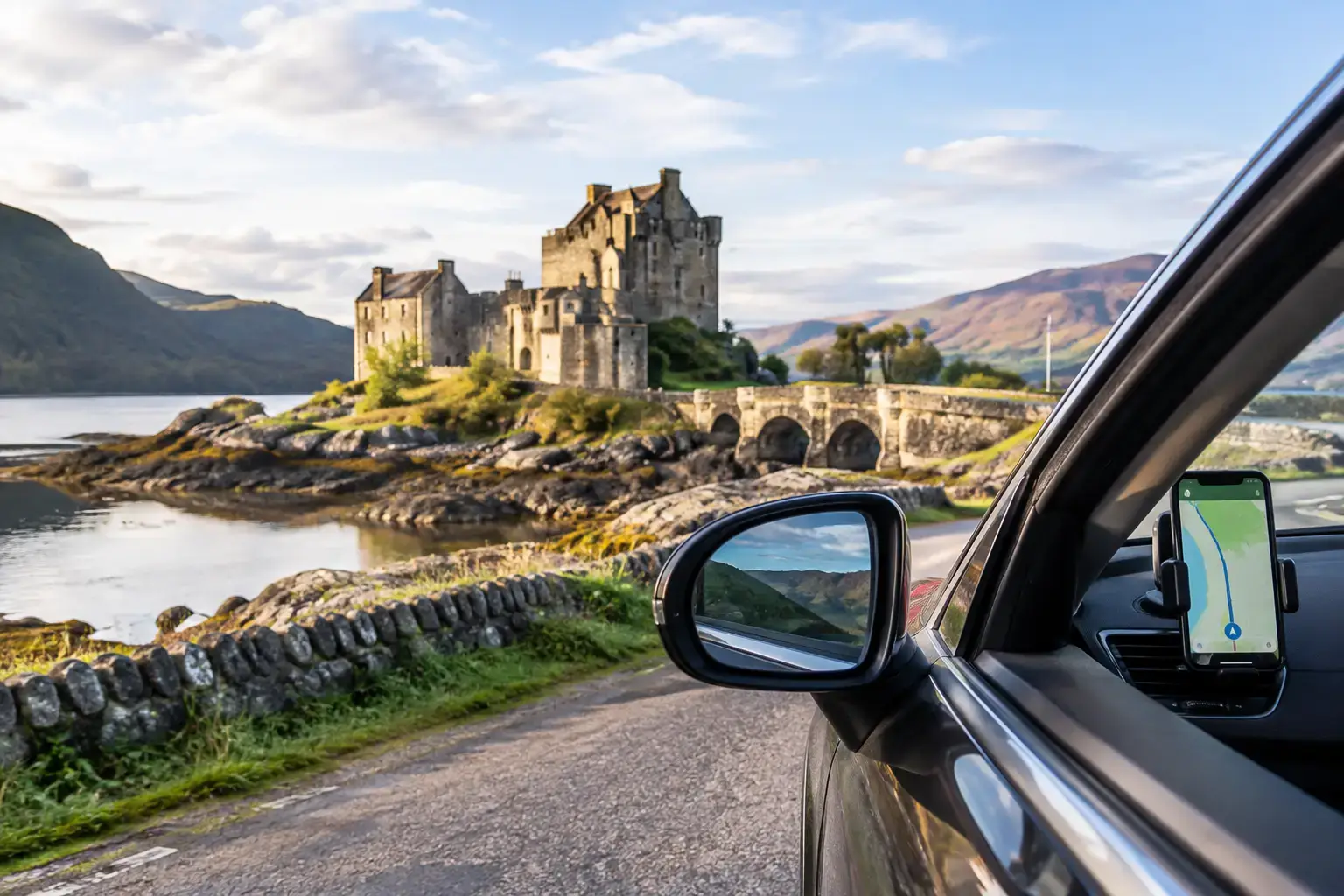
A castle stop can turn an ordinary driving day into the part of Ireland you remember most: a tower above a market town, a fortress beside a lake, or weathered walls facing the Atlantic. The best castles for self-drive travellers are not simply the grandest. They are the ones that fit naturally into a scenic route, offer realistic access by car hire (rental car), and reward you whether you have an hour or a whole afternoon.
Ireland has castles in every setting, from busy towns to quiet national parks. Choosing well matters. A beautiful ruin may be a poor fit if it requires a long detour, while a less famous stronghold can become a favourite stop because it breaks up the drive perfectly.
What makes a castle good for a self-drive holiday?
For independent travellers, the practical details shape the experience. The most useful castle stops have nearby parking or town parking within an easy walk, clear road access and enough surrounding interest to justify the stop. They also work well with the rhythm of an Irish road trip: arrive, stretch your legs, learn a little history, then continue without losing half the day.
Opening arrangements, parking charges and access can change with seasons and events, so check the official visitor information shortly before you travel. If you are visiting between late spring and early autumn, allow extra time at the most popular sites. Ireland’s narrow roads and inviting villages can make even a short distance take longer than expected.
10 of the best castles for self-drive travellers in Ireland
1. Trim Castle, County Meath
Trim Castle is the largest surviving Anglo-Norman castle in Ireland and one of the easiest major sites to add to a drive from Dublin towards the Boyne Valley. Its enormous keep, curtain walls and river setting give it the scale many visitors imagine when they think of a medieval fortress.
The castle sits beside Trim town, so you can combine it with lunch, a riverside walk or a look at the town’s other medieval remains. This is a particularly good first castle stop for travellers collecting a car and heading north-west from Dublin, rather than trying to tackle a distant attraction immediately.
2. Rock of Cashel, County Tipperary
The Rock of Cashel is not a conventional castle, but it earns its place on any self-drive list. Its collection of medieval buildings rises high above the surrounding plain, creating one of Ireland’s most recognisable silhouettes before you even step through the gate.
It is a sensible stop between Dublin and Cork or Kerry, and the nearby town makes it easy to pause for refreshments. Expect it to be popular, especially in fine weather. Arriving earlier in the day can make parking and photography less hurried.
3. Cahir Castle, County Tipperary
Cahir Castle feels wonderfully complete, with towers, defensive walls and the River Suir wrapping around its base. It is among the most atmospheric castles to explore if you want to understand how a fortified home was designed to defend itself.
For drivers, Cahir is a rewarding alternative or companion to the Rock of Cashel. The castle is in the town centre, with facilities close by, and suits an itinerary through Ireland’s south-east. If you have time, the area also supports a gentler day of driving through the Galtee and Tipperary countryside.
4. Kilkenny Castle, County Kilkenny
Kilkenny Castle is ideal for travellers who want history without leaving city comforts behind. Its long façade, parkland and elegant interiors show how a medieval stronghold changed over centuries into a grand family residence.
Driving into a historic city takes more patience than stopping at a rural ruin, so use a central public car park and explore on foot. The reward is that your castle visit can easily include Kilkenny’s compact streets, independent shops and cafés. It works especially well on a route between Dublin and the south-east.
5. Bunratty Castle, County Clare
Bunratty Castle is a strong choice if you are travelling between Shannon, Limerick and the Wild Atlantic Way. The 15th-century tower house is well known, but its value for self-drivers is equally practical: it is close to major roads and gives a memorable historic stop without a demanding detour.
Allow enough time to see the folk park as well as the castle if that interests your group. Families often appreciate the variety, while couples and solo travellers may prefer a shorter castle visit before continuing west towards County Clare’s coastal scenery.
6. Dunguaire Castle, County Galway
Dunguaire Castle stands on the edge of Galway Bay just outside Kinvara, where its small tower and waterside walls make a striking photographic stop. It is not the place for a long, detailed castle day, but it is superb for a pause on the drive between Galway city and the Burren.
Its appeal is location. You can stand by the water, take in the changing light over the bay and then continue towards limestone landscapes, coastal villages and the Cliffs of Moher area. Visitor access and events vary, so treat it as an exterior stop unless current arrangements confirm otherwise.
7. Ross Castle, County Kerry
Ross Castle sits on the shores of Lough Leane in Killarney National Park, with mountains and water providing the grand backdrop. It is one of the best castles for self-drive travellers who want history woven into a scenic day rather than a separate urban visit.
The approach through the national park is part of the pleasure. Build Ross Castle into a Killarney day with viewpoints, woodland walks or a lakeside stop, but leave room in your schedule. The roads around Killarney can be busy in peak season, and the scenery invites frequent pauses.
8. Donegal Castle, County Donegal
Donegal Castle sits in the heart of Donegal Town, where the River Eske meets the bay. Its combination of a medieval tower house and a later Jacobean wing gives visitors a clear sense of changing power and taste across the centuries.
It makes a practical cultural break when driving the north-west coast. The town has places to eat and stock up before heading towards Slieve League, Glenveagh or the Donegal coast. Because it is a town-centre visit, plan to park once and enjoy the area on foot.
9. Glenveagh Castle, County Donegal
Glenveagh Castle is different from a defensive fortress: a Victorian castle set beside a lake within Glenveagh National Park. The gardens, hills and remote setting create one of Ireland’s most distinctive castle experiences.
This stop needs more planning than Donegal Castle because visitors park away from the castle and must follow the current arrangements for reaching it, which may involve a walk or seasonal transport. For travellers with a full day in Donegal, that extra effort is precisely the point. It feels like a destination, not just a roadside photograph.
10. Carrickfergus Castle, County Antrim
Carrickfergus Castle is a commanding Norman fortress beside Belfast Lough and an excellent opening or closing stop on a Causeway Coast drive. Its substantial walls and waterside position make its military purpose immediately clear.
The town location makes logistics straightforward, while its position north of Belfast means it can fit neatly before you turn towards the Antrim coast. It is especially useful for travellers arriving by ferry or those beginning a Northern Ireland itinerary from Belfast rather than Dublin.
Choose castles that match your route, not just your wish list
Trying to visit every famous castle can make a driving holiday feel like a checklist. Instead, choose one major castle for each region you are already travelling through. Trim suits the Boyne Valley, Cahir and the Rock of Cashel suit the south-east, Bunratty works for Clare, Ross fits Kerry, and Carrickfergus complements the Causeway Coast.
This approach leaves time for the unscheduled moments that make self-driving special: a village bakery, a viewpoint after rain, or a short coastal walk suggested by the weather. Castles are at their best when they add shape to your day, rather than forcing you to race through it.
For travellers using MyDriveTour, a paid regional self-guided tour can help place these stops within a wider route, using GPS-guided directions, suggested sights and short audio introductions at selected places. The free app download lets you see how the service works, while individual tours or the All Tours bundle suit travellers covering several Irish regions.
Pack a light waterproof layer, keep some flexibility in your driving day and choose the castle that is already waiting along your road. A well-timed stop behind ancient walls is often where Ireland’s history feels closest.
