
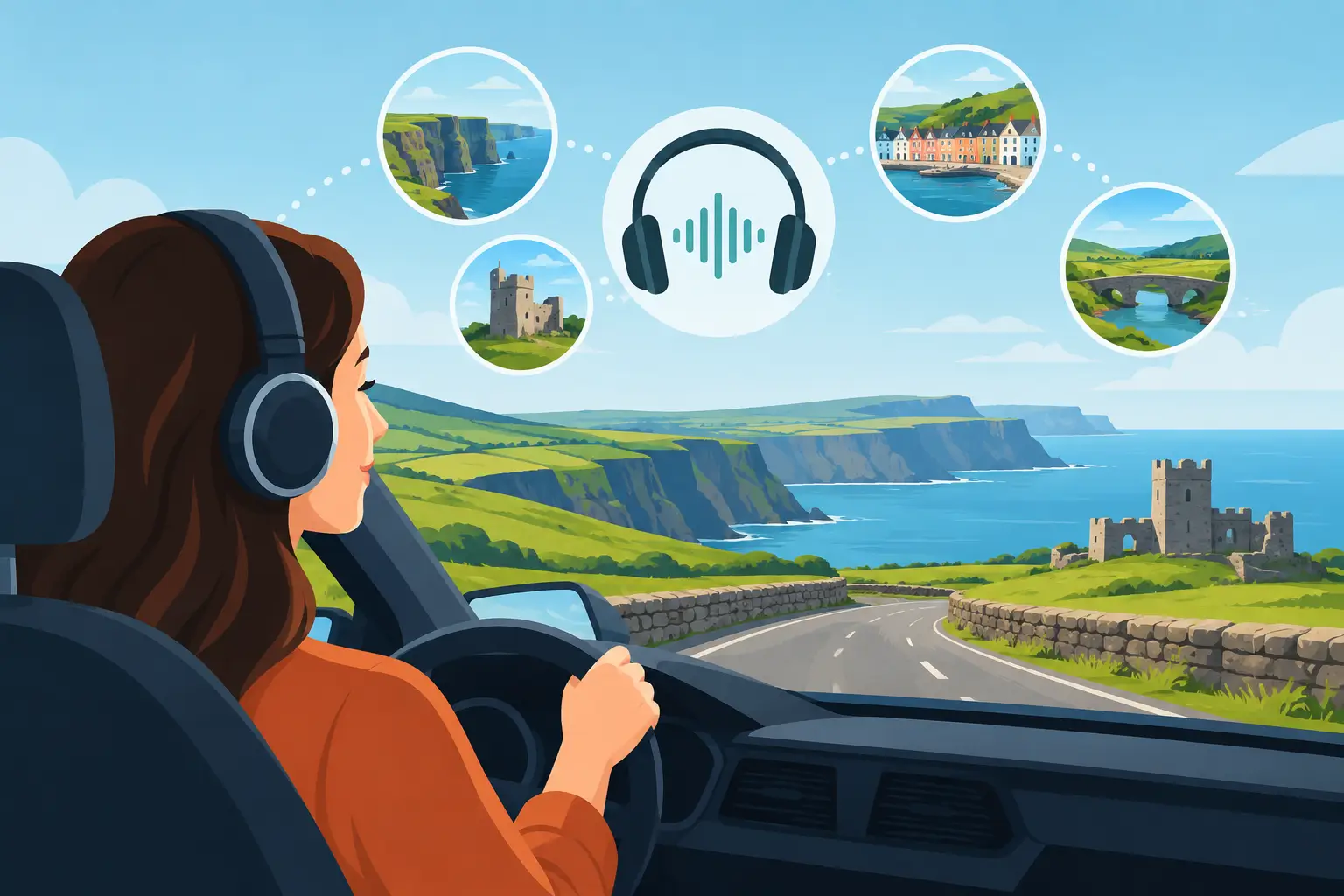
The road from Killarney to the coast can be spectacular, but a view alone does not tell you why an island sits in the lake, where the old road once ran, or which small village is worth a pause. An Irish audio guide turns the miles between headline attractions into part of the experience. For independent travellers, it is a practical way to hear the stories behind the scenery without having to follow a coach timetable or spend each evening planning the next day.
Ireland rewards unhurried road trips. A castle ruin may appear just beyond a bend, a beach may be reached by a lane you would otherwise have passed, and the most memorable lunch stop may be a village suggested by someone who knows the area. The right guide gives your journey shape while leaving room for those welcome changes of plan.
What an Irish audio guide should do
An audio guide is most useful when it does more than read out facts. It should help you understand what you are seeing at the moment you see it, whether that is a cliff road on the Wild Atlantic Way, a harbour on the Ring of Kerry or a remarkable stretch of coast near the Giant’s Causeway.
That means location matters. Rather than searching a long list of recordings while parked at the roadside, geofenced commentary can begin automatically as you approach a point of interest. You keep your attention on the journey while the story arrives at the relevant place.
Good commentary also needs a human point of view. Ireland has no shortage of famous landmarks, but the details that stay with visitors are often more personal: a local legend, the reason a town developed where it did, a former railway line, or a quiet viewpoint with a bigger story than its signboard suggests. Qualified tourist guides and experienced chauffeurs understand how to connect these details into a day that feels coherent rather than crowded.
An Irish audio guide should support practical decisions too. Is a stop suited to a brief look or a longer visit? Is it best to visit early? What else is nearby? Useful attraction information lets you decide how to use your time without being pushed into a rigid schedule.
A self-drive holiday, with less research
The appeal of driving in Ireland is freedom. You can leave after breakfast, stop when the light changes over the hills and choose whether to spend an hour or an afternoon in one place. The drawback is that freedom can become a surprising amount of work. You need to judge distances, find worthwhile stops, check where routes actually go and work out why each place matters.
A well-planned digital tour takes away much of that effort. It gives you a curated route, clear points of interest and a sensible order for the day, while allowing you to begin where you are and choose the stops that appeal. If the children want a beach break, if rain changes your plans or if you simply linger over lunch, you remain in control.
This is where an app-based guide differs from a printed itinerary. Maps and route notes are useful, but they can make the passenger the permanent navigator and researcher. Audio commentary shares the work more naturally. The driver can focus on the road, and everyone in the car can enjoy the same story.
For families and couples, that shared experience is part of the value. Instead of arriving at a viewpoint and reading separate snippets on different screens, you hear why the place is significant together. It makes the conversation in the car richer, particularly on longer stretches between major stops.
Navigation and commentary work best together
No audio guide should distract from driving. The best approach is simple: prepare your route before setting off, use your preferred mapping app for turn-by-turn directions, and let the audio content provide the context along the way. You do not need to learn unfamiliar directions or attempt to follow a paper map through narrow country roads.
This combination is especially helpful in regions where the journey is as important as the destination. Coastal drives can include tempting detours, changing weather and roads that take longer than they appear on a map. A guide-led itinerary helps you set realistic expectations, then gives you the flexibility to skip a stop or change the order if the day demands it.
Choose stories, not a stream of facts
There is a difference between being informed and being overwhelmed. Constant commentary can make a beautiful drive feel like a lecture, while sparse information can leave you wondering what you have missed. Look for an Irish audio guide that selects moments worth hearing about and gives each one enough context to be memorable.
The strongest narration balances history, landscape and local life. A prehistoric monument has more meaning when you understand the people who built it. A dramatic headland becomes more than a photograph when you hear about its geology, maritime history or place in local folklore. The goal is not to turn every stop into a lesson. It is to make the place feel more alive.
Keep control of your day
A fixed guided tour suits some visitors, especially those who do not want to drive. But it also means departing and stopping to somebody else’s timetable. An audio-led self-drive tour suits travellers who want expert guidance without giving up their independence.
You may want to begin after a relaxed hotel breakfast, make an unplanned coffee stop, or spend longer at one attraction and pass another by. That is perfectly reasonable. A flexible guide should work around your holiday rather than insist that your holiday works around it.
MyDriveTour brings this approach to routes across Ireland and Northern Ireland, combining professionally curated touring days with automatic audio, route guidance and information for visitor attractions. Its tours are designed to cover the places people come to see, while also introducing less-commercial local discoveries that can make a trip feel genuinely personal.
Make the most of the guide before you set off
A few minutes of preparation can make the day more relaxed. Download the tour and make sure your phone is charged before leaving accommodation. If you are travelling with others, agree who will handle the phone and route settings before the car starts moving. A windscreen mount and a charging cable are small additions that make a noticeable difference on a full day out.
It is also wise to look at the overall route rather than treating it as a checklist. Pick two or three stops you would be disappointed to miss, then regard the rest as options. This leaves space for the things no itinerary can schedule: a clear spell of weather, a crafts shop you spot from the road, or a recommendation from the person serving lunch.
Check opening times for any attraction where entry matters to you, particularly outside the busiest summer months. Ireland’s countryside is available all year, but seasonal hours can change. For popular places, arriving earlier can offer a quieter experience and leave the afternoon open for smaller, less busy stops.
The value is in knowing what to look for
A memorable Irish road trip is rarely about racing from one famous landmark to the next. It is about recognising the character of the places in between: the patchwork fields, the old stone bridges, the fishing villages, the mountain passes and the stories that explain why they are there.
A thoughtfully made audio guide gives you that local perspective without taking away the pleasure of finding your own way. Set the route, listen when the landscape has something to say, and leave enough time to stop when Ireland invites you to slow down.
